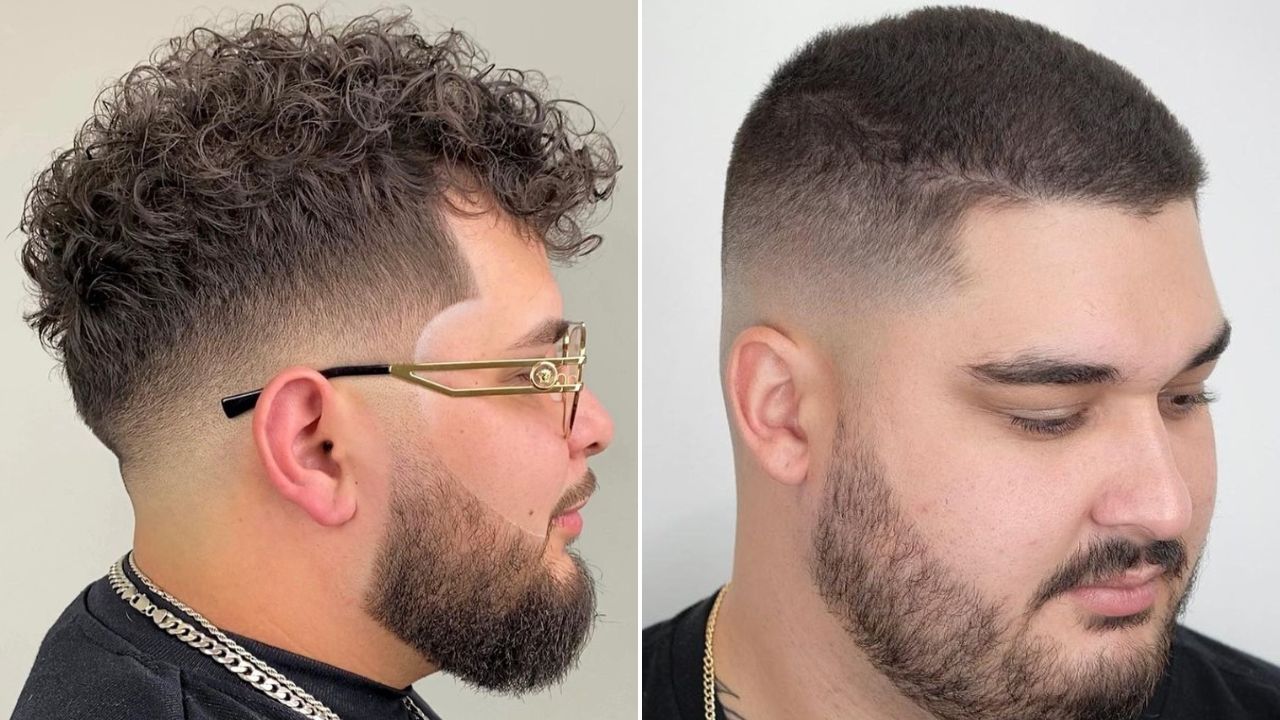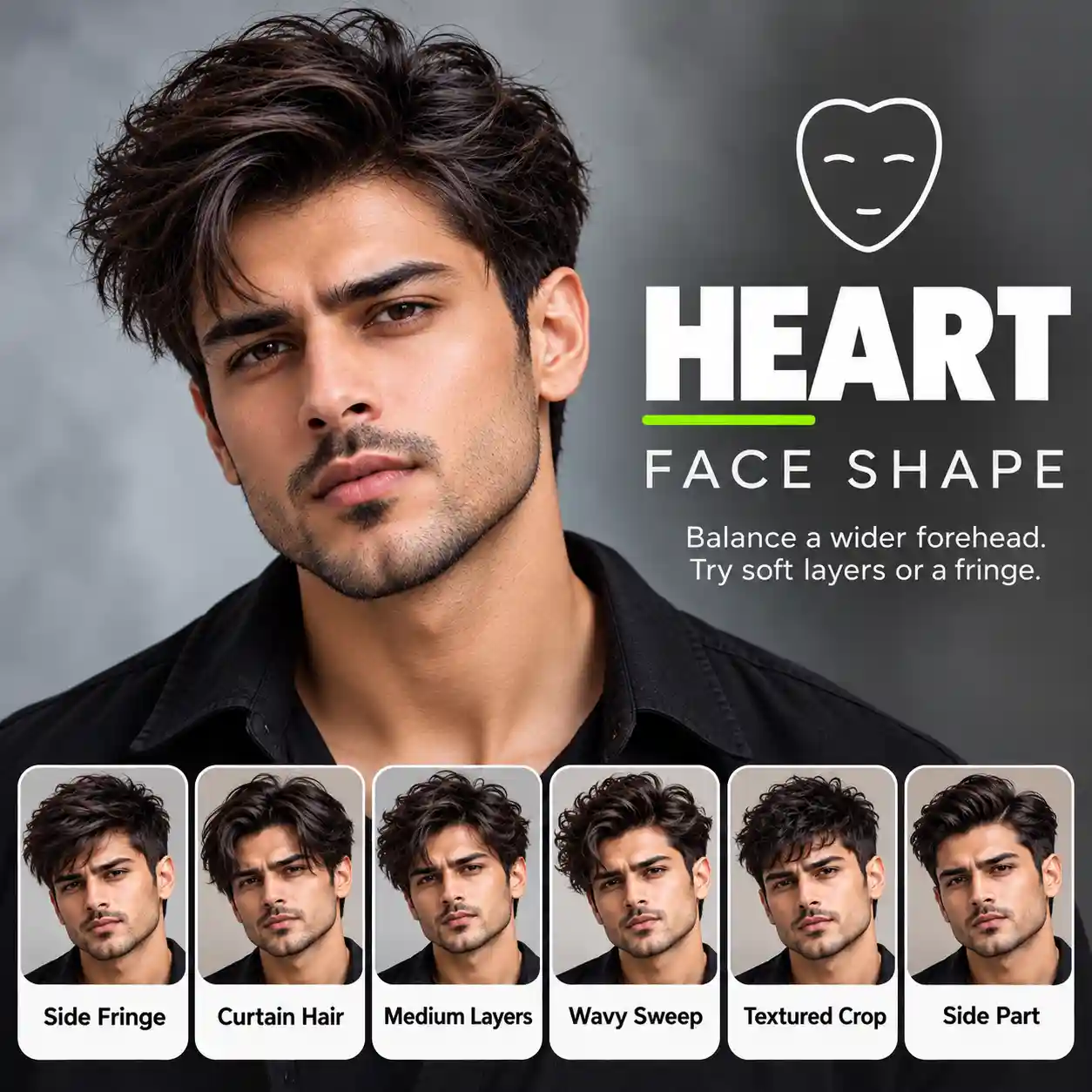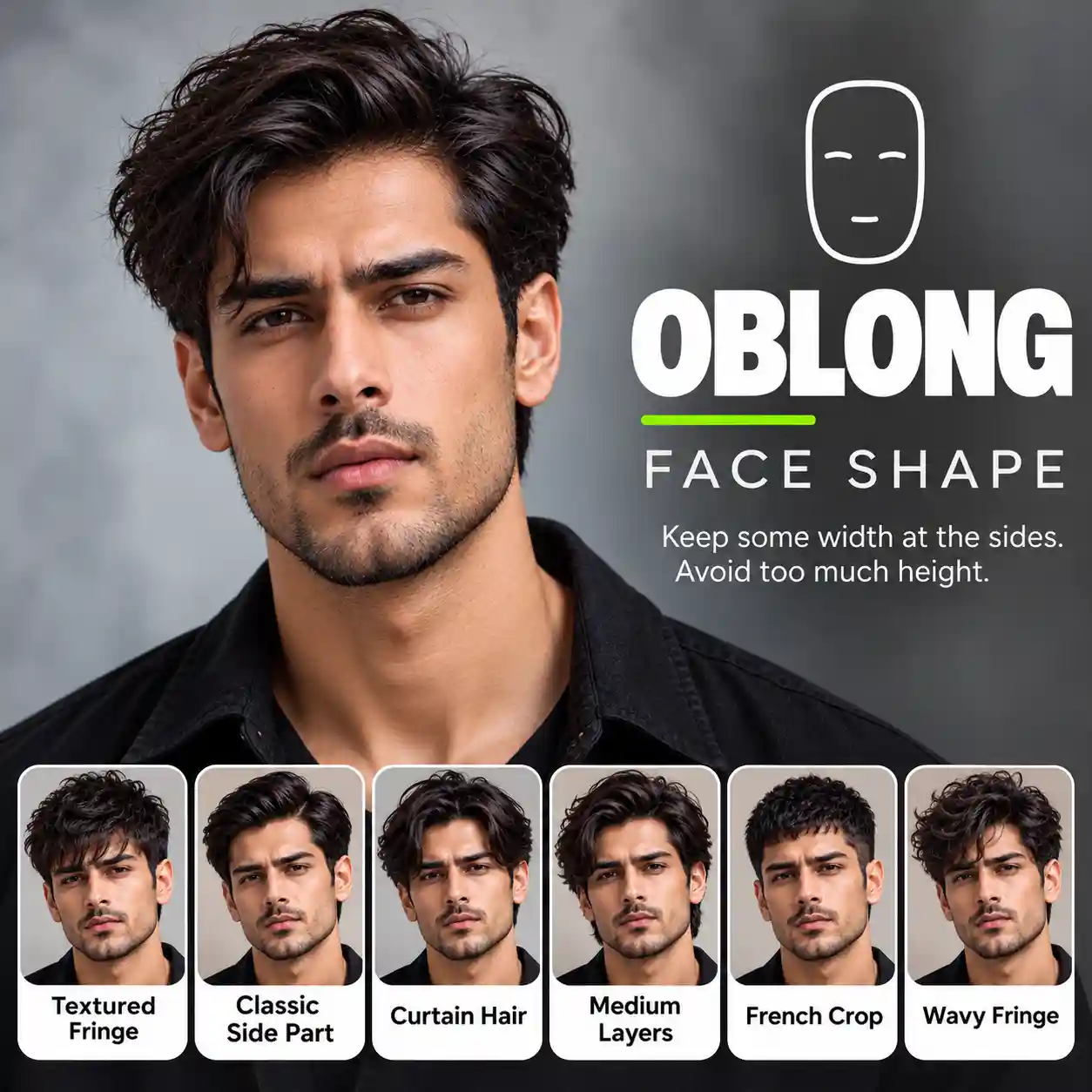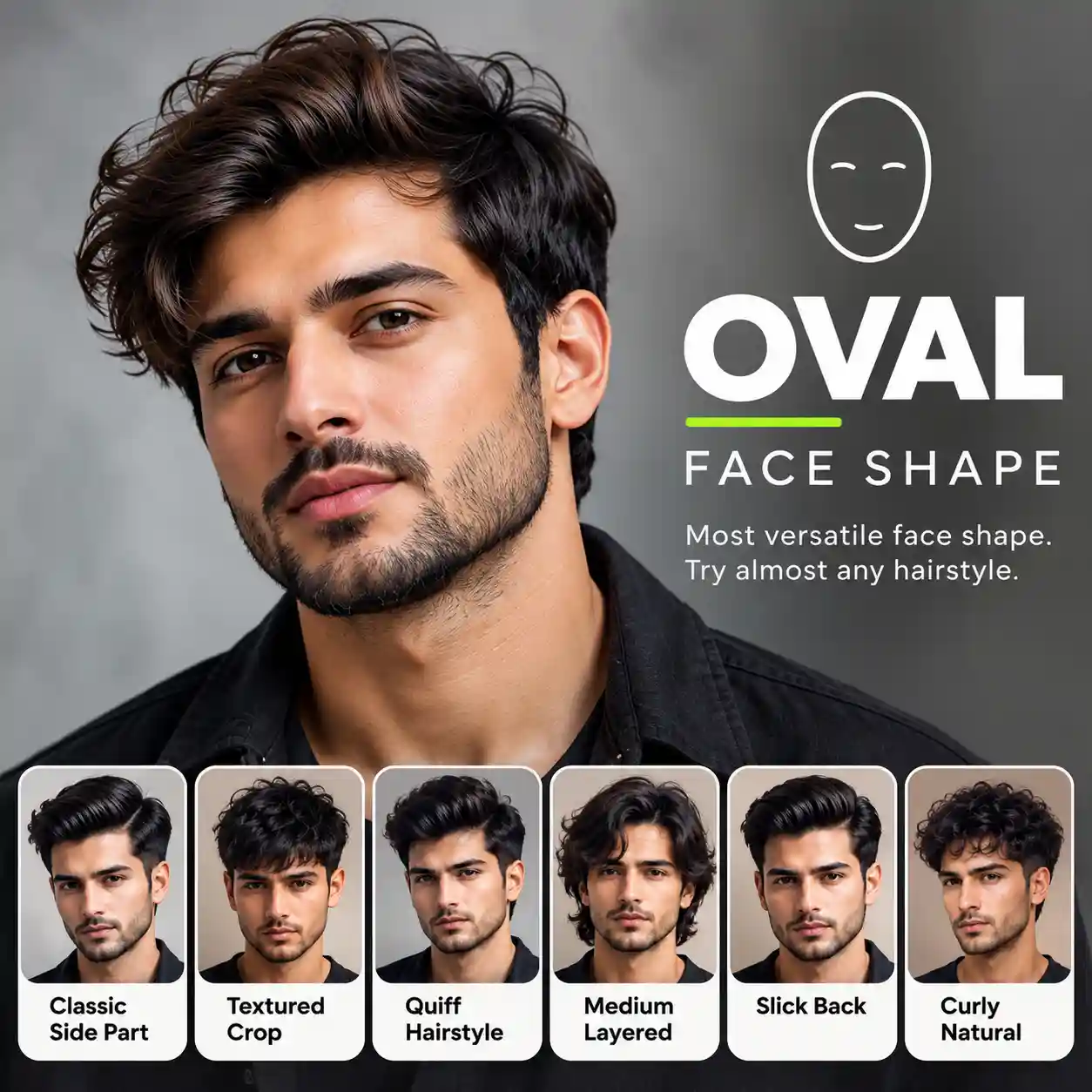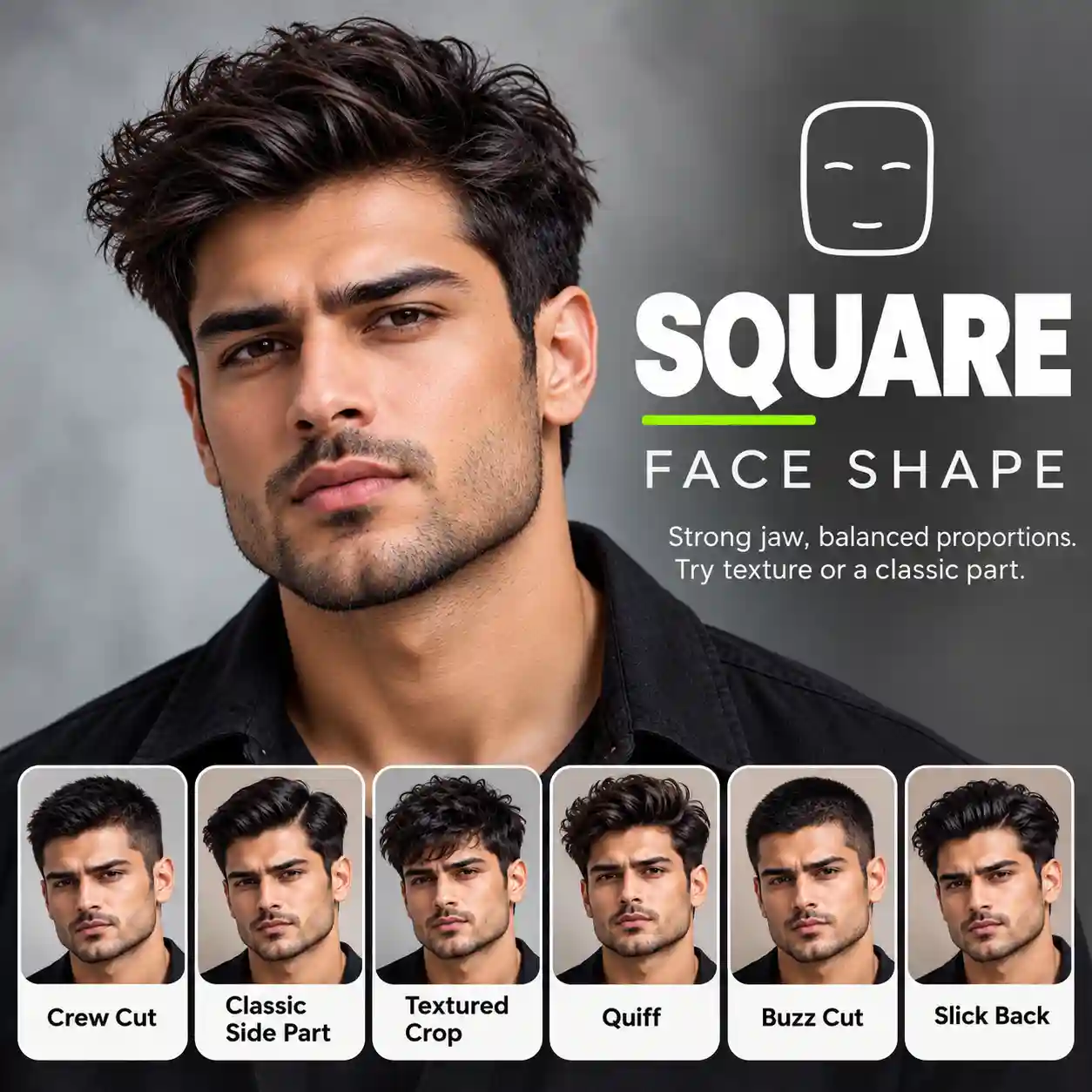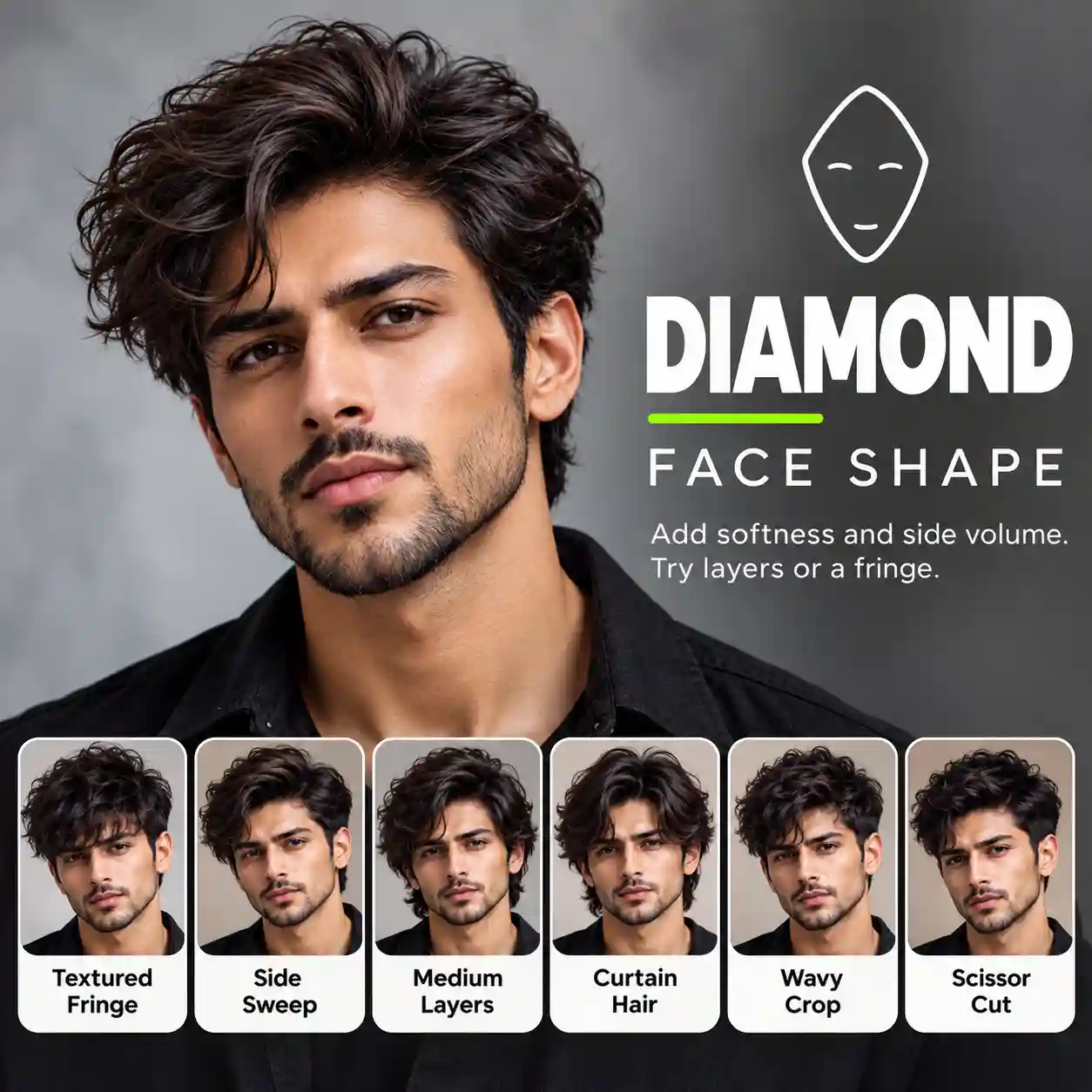
A diamond face shape usually has cheekbones that appear wider than the forehead and jaw, with a chin that may look narrower or more pointed. Choosing a haircut is not about hiding those features. It’s about finding a comfortable balance between volume, texture and the way your hair frames your face.
This guide covers six practical hairstyle ideas for men with diamond-shaped faces, plus barber instructions, styling tips, hair-type considerations and photographs you can use as references. The ideas suit different lengths and preferences rather than promoting one mandatory haircut.
Quick Answer: Best Hairstyles for Diamond Face Men
A textured crop, soft side part, layered fringe, medium-length waves, relaxed quiff or balanced pompadour can all complement a diamond face. If your cheekbones are prominent and your forehead looks narrower, keeping a little texture around the temples or fringe may create a balanced silhouette. Very tightly shaved sides can accentuate the cheekbone width—but you can still wear them if you like the contrast.
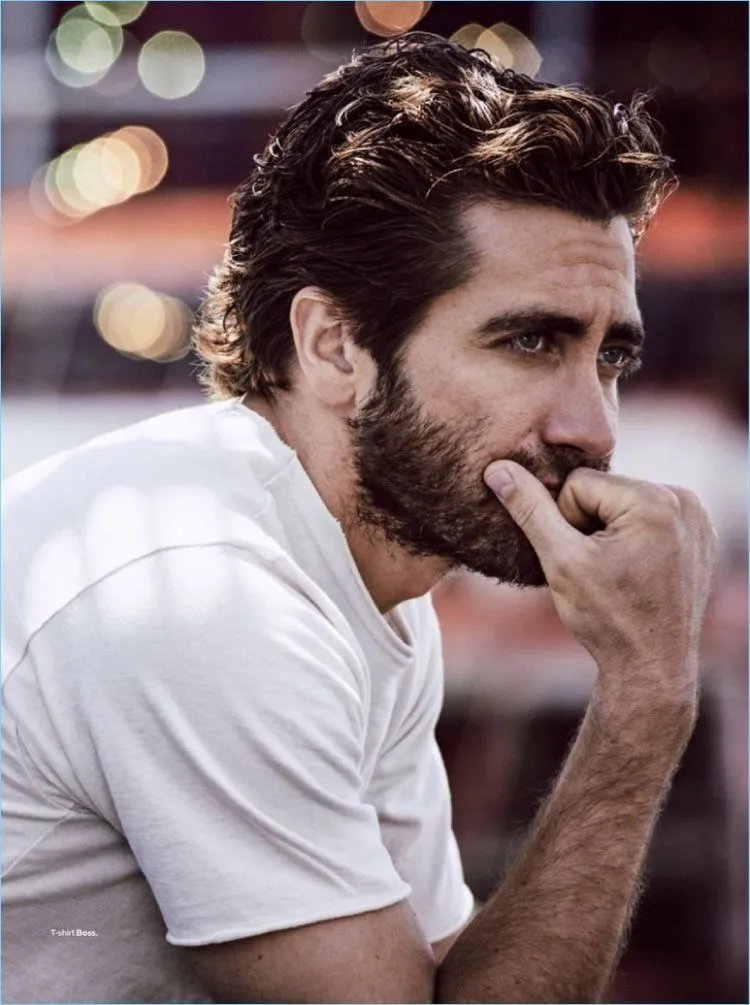
How to Recognize a Diamond Face Shape
Face-shape categories are approximate, not a diagnosis. Stand in front of a mirror and look at three features: the width of your forehead, the widest point around your cheekbones, and the width of your jaw. A diamond shape often shows prominent cheekbones, a comparatively narrower forehead, and a narrower jawline.
You may also have a pointed chin, although the exact jawline differs between people. If your forehead and jaw are similarly wide and your face is longer than it is wide, an oval shape may also be a reasonable description. Many faces do not fit neatly into one category.
You can compare all six categories on our hairstyles by face shape page, including oval face hairstyles and square face hairstyles.
6 Hairstyles to Consider for a Diamond Face
1. Textured Crop With Soft Fringe
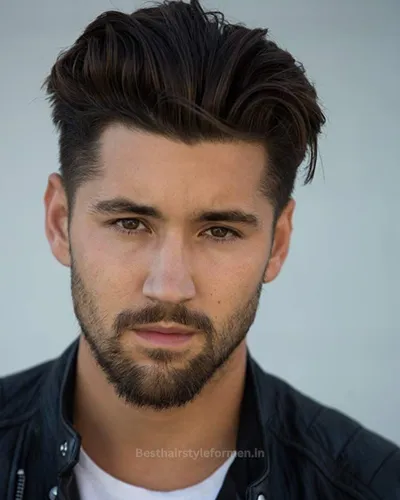
A textured crop can create a casual outline around the forehead without requiring a tall, sculpted top. A slight fringe gives more coverage near the temples, and the cropped sides keep the hairstyle neat. This is a strong choice if you like a short haircut that is easy to refresh in the morning.
Tell your barber: Ask for a scissor-cut or softly textured top, leaving enough length at the front for a movable fringe. A low taper can keep the edges tidy while preserving some width through the upper sides.
Styling tip: Use a pea-sized amount of lightweight matte paste or styling cream. Work through slightly damp hair and separate sections with your fingers rather than flattening the fringe.
2. Classic Side Part
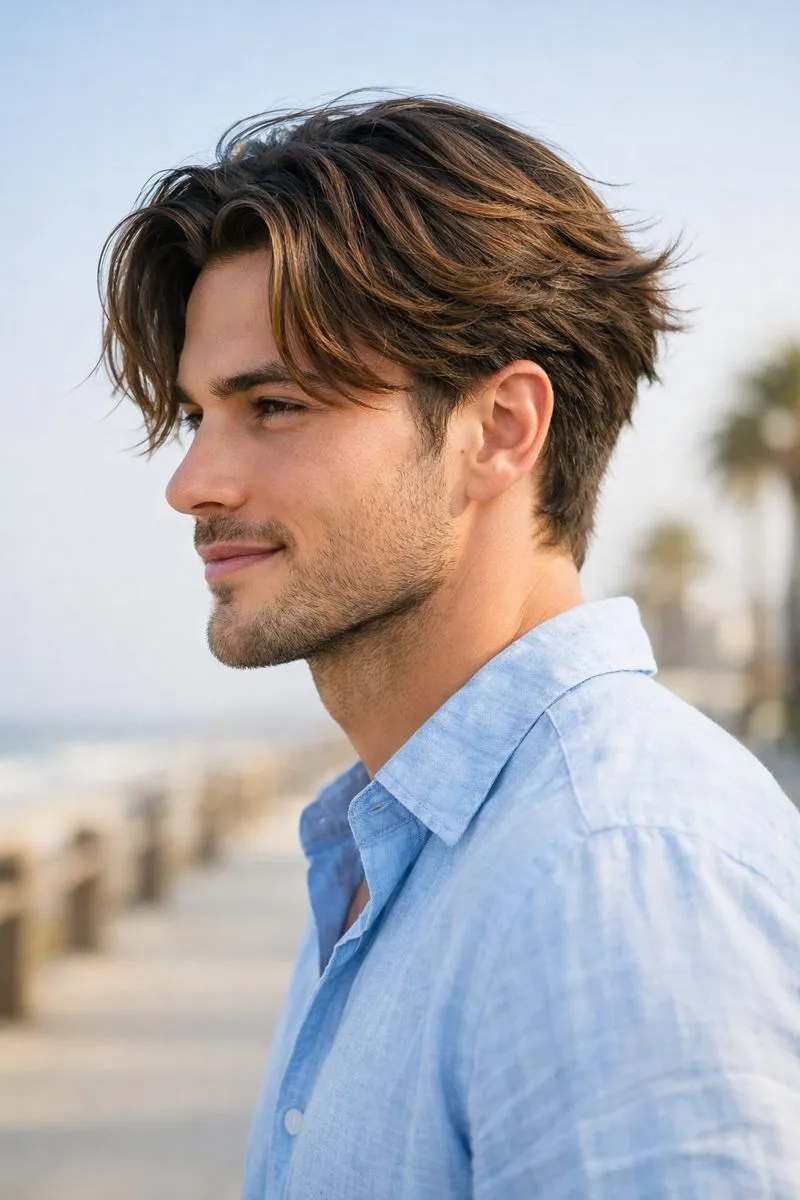
A side part creates an intentional direction for the hair while still letting you control volume near the forehead. It can look businesslike when combed cleanly or more relaxed when styled with loose texture. Keeping moderate fullness on the upper sides can complement a diamond-shaped face.
Tell your barber: Ask your barber to preserve enough top length for a natural part and to blend the sides without taking them too tight. Show the direction in which your hair naturally grows.
Styling tip: Comb into place while damp. For a softer finish, use a small amount of light cream instead of a heavy gel.
3. Relaxed Quiff

A quiff adds a little volume at the front while keeping the silhouette more structured. On diamond faces, you can choose moderate height rather than an exaggerated lift, especially if you would prefer the forehead to look more balanced with the cheekbones. This cut works with straight and wavy textures.
Tell your barber: Ask for about enough length at the front to lift comfortably, with a soft taper or low fade rather than an extremely aggressive high fade. The ideal length depends on your current hair.
Styling tip: A quick blow-dry upward and backward gives lift. Finish with a small amount of matte product to keep the movement natural.
4. Medium Wavy Layers
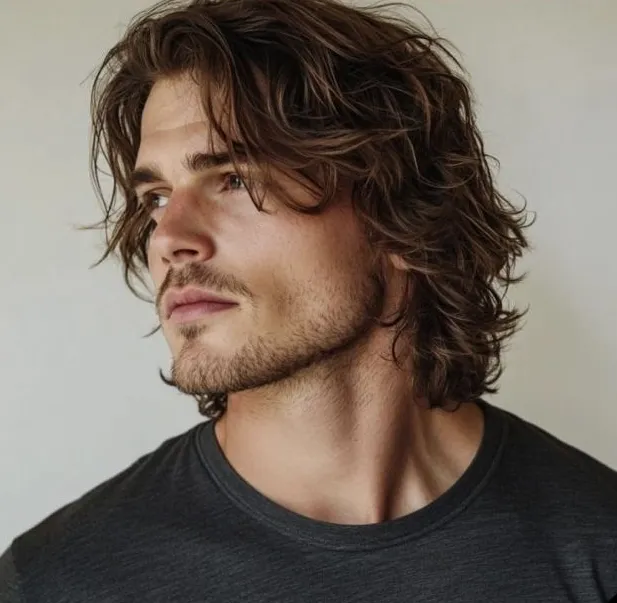
Medium layers give wavy hair room to move and can frame the face naturally. They are especially useful if you enjoy a relaxed look or want a break from frequent sharp fades. A side-swept front section can soften the outline near prominent cheekbones.
Tell your barber: Request gentle layering that takes unnecessary weight out without removing too much length. Discuss where the shortest layers should fall around the face.
Styling tip: Use a leave-in conditioner or lightweight curl cream if your waves need help defining. Scrunch with your hands, then air-dry or diffuse gently.
5. Soft Pompadour
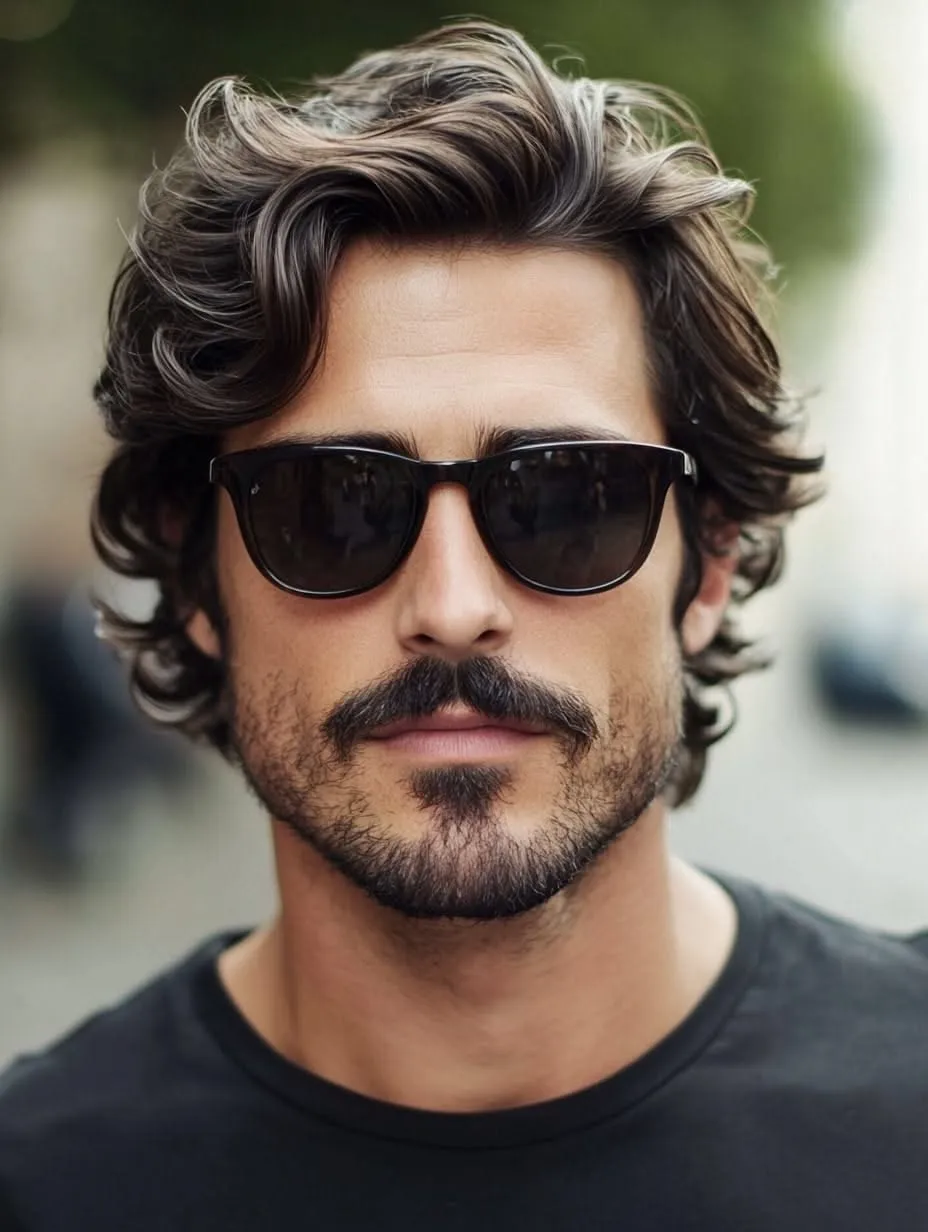
A pompadour draws the eye toward the front and can look polished or dramatic depending on height and side length. For a diamond face, a softer pompadour with controlled volume may feel more balanced than a very high style with extremely shaved sides. It is a good option if you already enjoy regular styling.
Tell your barber: Keep enough length through the front for lift. Ask your barber for a gradual blend and mention whether you prefer volume distributed backward or concentrated right at the hairline.
Styling tip: Blow-dry the hair back using a brush, then shape with pomade or paste. Start with less product to avoid making the top rigid.
6. Modern Curly Fringe
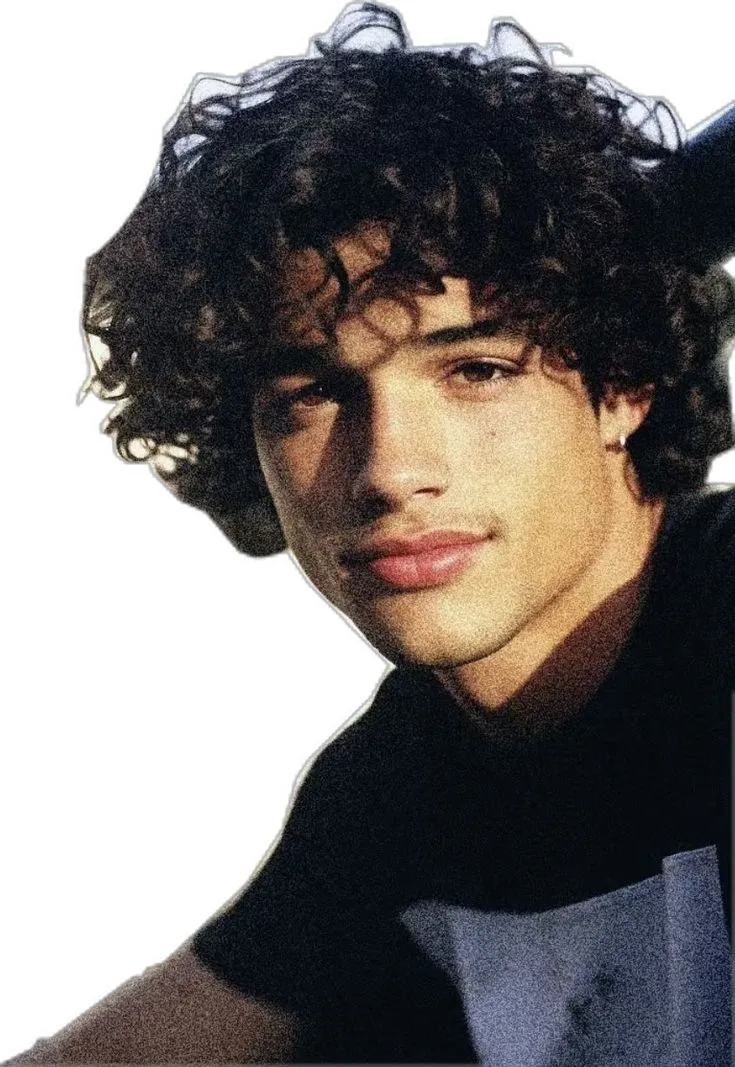
If you have curls, a layered fringe can bring natural volume toward the forehead and frame the face. It looks more effortless than trying to straighten the hair into a rigid shape. The sides can be tapered, but leaving enough weight where the curls connect creates a smoother transition.
Tell your barber: Ask the barber to account for how much the curls shrink after drying. Preserve the natural curl pattern around the front and temples and use gradual layering rather than thinning everything aggressively.
Styling tip: Apply a little curl cream on damp hair, scrunch lightly and let the curls settle. Avoid brushing them once dry if that causes frizz.
Which Haircut Length Works Best?
Short hair for diamond faces
If you prefer minimum daily effort, try a short crop or textured fringe with a soft taper. A simple buzz cut can also look good, but it reveals more of the natural shape of the head and face. See the short hairstyles gallery for alternative references.
Medium hair for diamond faces
Medium length gives you extra styling options, including side parts, quiffs, curtains and soft layers. This is often the most flexible range if you want to experiment with how much volume sits near the forehead or temples. Keep enough length to experiment before committing to a shorter cut.
Long hair for diamond faces
Long hair can frame the cheekbones and jaw with natural movement. Ask for face-framing layers if you want the hair to sit softly rather than hang as one heavy section. If you tie your hair back frequently, remember that the resulting silhouette will be different from wearing it loose.
Hair Type Matters as Much as Face Shape
Straight hair: Structured side parts, tapered quiffs and soft fringes can be easy to shape with a comb or light blow-dry. Wavy hair: Flowing medium layers let natural movement create the texture. Curly hair: Consider curl-conscious layering and avoid choosing a top length without accounting for shrinkage.
Thick hair: Your barber may need to reduce weight internally so the style moves naturally. Fine or thin-looking hair: Shorter textured cuts can create a tidy silhouette without relying on lots of product. No face-shape rule overrides your hair’s natural behavior or how you prefer to wear it.
Barber Instructions: What to Say
Bring one front-facing photo and one side-view photo of the same haircut if possible. Tell the barber whether you like a fringe, a side part or visible volume at the front, and explain how much time you spend styling in the morning.
Example barber script: “I have prominent cheekbones and want a balanced haircut that keeps some natural width around my temples. Leave enough texture at the front to style it loosely. Please show me where the fade or taper will start, and don’t take the sides too short before we agree on the shape.”
If you prefer a sharper fade, you can still request it—just use the photograph to explain the level of contrast you want. The best barber instructions describe the haircut rather than demand a particular shape based only on facial proportions.
Common Styling Mistakes to Avoid
Copying a photograph without considering hair texture: a haircut photographed on straight hair will not necessarily sit the same way on curls. Removing too much length too quickly: a small adjustment to the sides can change the look significantly. Using too much product: heavy waxes and gels may flatten the natural movement that makes the cut attractive.
Ask your barber how the haircut will grow out. The first-day result is useful, but a style that still looks good after several weeks may be a better long-term fit.
Frequently Asked Questions
What is the best hairstyle for a diamond face shape?
There is no universal best haircut. A textured crop, side part, relaxed quiff, curly fringe or medium-layered style can all work. Choose one that suits your actual hair texture and how much styling you want to do.
Can men with diamond faces get a fade?
Yes. A low fade or taper may preserve more fullness near the temples, while a high fade produces stronger contrast. Neither is forbidden; the preferred result is a matter of personal style and head shape.
Does a middle part suit a diamond face?
It can. A medium-length middle part can frame the cheekbones with soft layers. Keep the part relaxed or offset slightly if that complements your natural hair growth better.
Should I avoid very short hair?
Not necessarily. Short hair can look excellent on a diamond-shaped face. It simply makes the overall outline of the face and head more visible, which some people like.
Final Recommendation
Choose two or three reference photos from this page and show them to your barber. Focus on the placement of volume, the fringe, the side length and maintenance requirements. You can continue exploring our face shape hairstyle hub, fade haircut guides and men’s hairstyle images before deciding.