


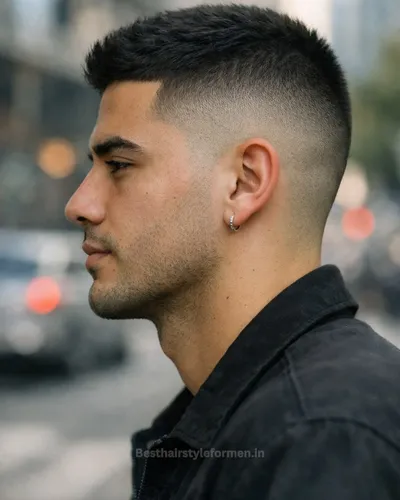
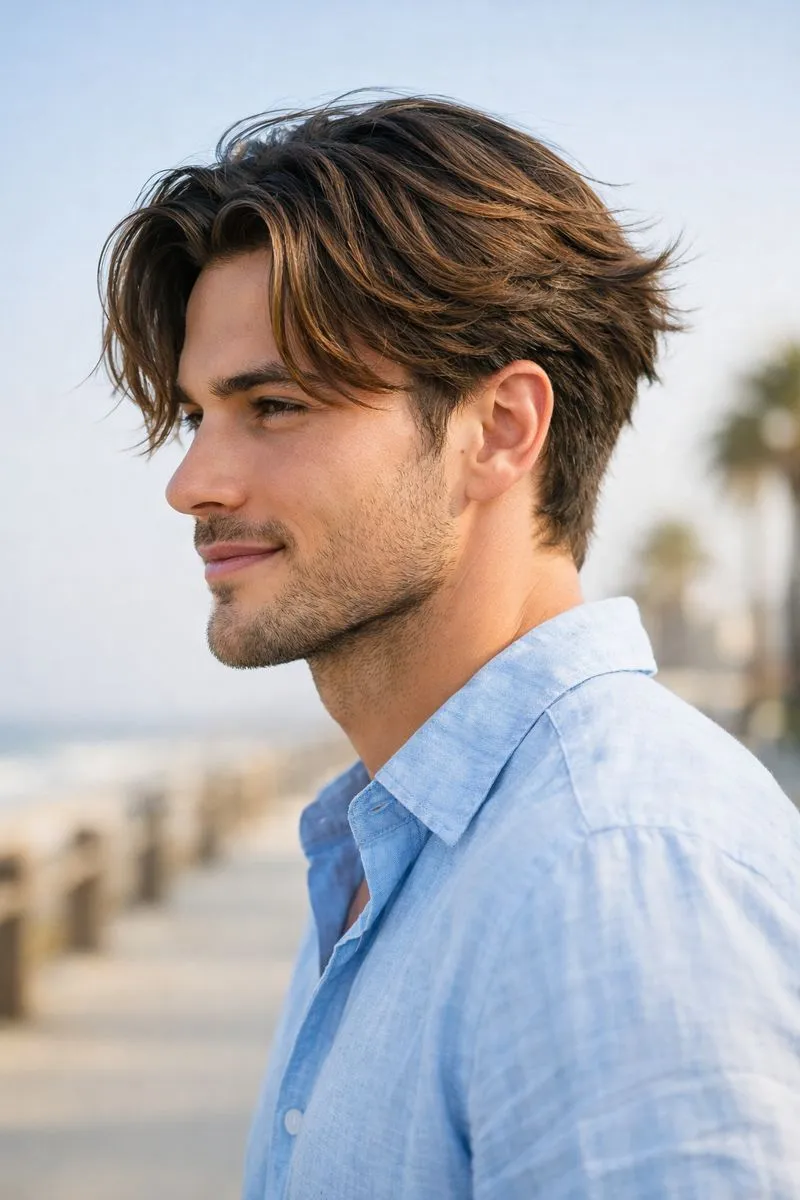
The best haircuts for men aren’t defined by one trend. A good cut creates the shape you want before you reach for styling products, works with your natural hair growth and still looks good as it grows out. This guide compares fades, tapers, crops, crew cuts and longer styles, with photographs and practical instructions for your next barber appointment.
If you are searching by hair type, length or face shape rather than the cut itself, start with our hairstyles for men directory. Here, the focus is on the structure of the haircut: where the sides get shorter, how the top is shaped and the amount of maintenance involved.
Quick Answer: Which Men’s Haircuts Should You Consider?
Start with a textured crop if you want a short cut with movement, a crew cut or buzz cut if you prefer minimal morning styling, a low taper for a subtle outline or a mid fade for more contrast. A French crop gives you a forward-styled fringe, while a curly top fade preserves natural curls. The best choice depends on texture, length, lifestyle and what looks right to you.
Popular Haircuts for Men: Photo Guide
The photos below illustrate different cutting techniques. Each example is a starting point, not a one-size-fits-all prescription. Take a reference photo to your barber and discuss the length and finish before the first cut.

Textured Crop
A short haircut with movable texture and a tidy outline. A crop can be shaped for straight or wavy hair and often requires little product. The fringe can sit forward or be styled slightly upward.
Barber instructions: Ask for a softly textured top with a neat taper; specify whether you want the fringe short or loose.

French Crop
A French crop has a top directed forward, usually with a short fringe. It can be paired with close faded sides or a softer taper, making it easy to adapt for different settings.
Barber instructions: Take a front-view photo and decide whether the fringe should be blunt, uneven or lightly layered.

Crew Cut
A crew cut keeps the top short, frequently leaving a little more length at the front, with shorter blended sides. It’s useful when you want a familiar, clean hairstyle without complex daily styling.
Barber instructions: Ask how much front length can be kept for your natural hair texture.
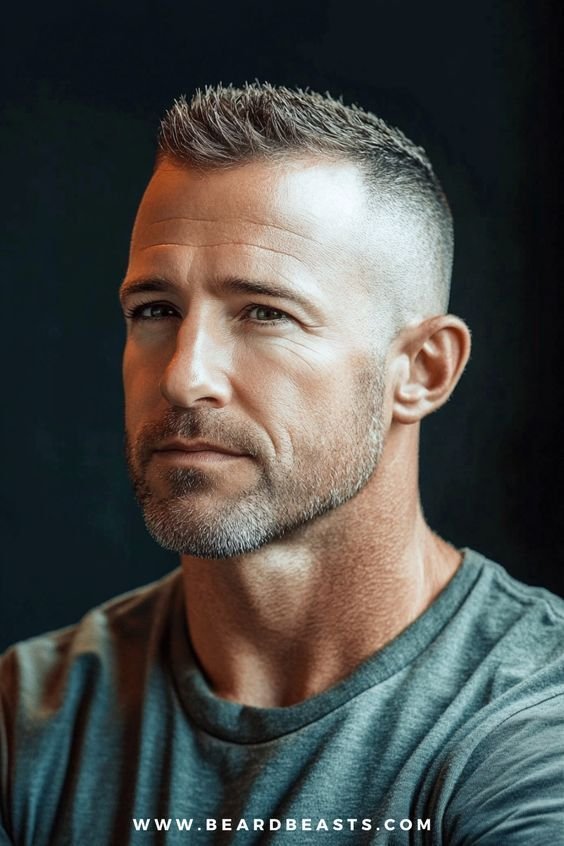
Buzz Cut Fade
A buzz cut keeps the hair very short. Adding a fade creates a graduated transition rather than using the same clipper guard all over. Morning styling is minimal, but the edges can grow out quickly.
Barber instructions: Choose the top guard length and fade height before cutting.
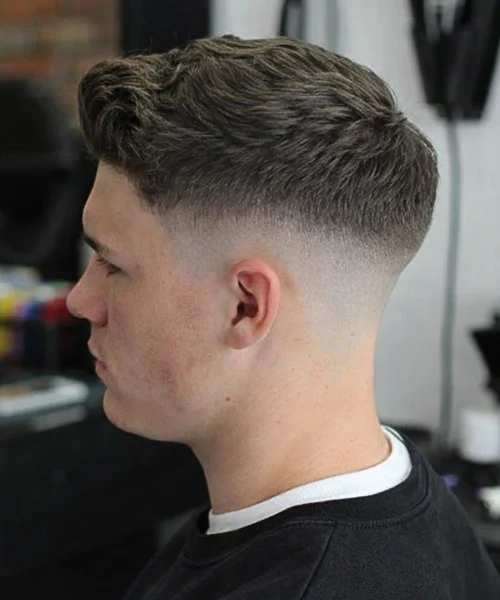
Low Fade
A low fade starts the blend near the ears and neckline, retaining more weight higher on the sides. It pairs well with textured crops, side parts, quiffs and natural curls.
Barber instructions: Request a low blend and confirm whether the shortest hair should remain visible or reach skin.
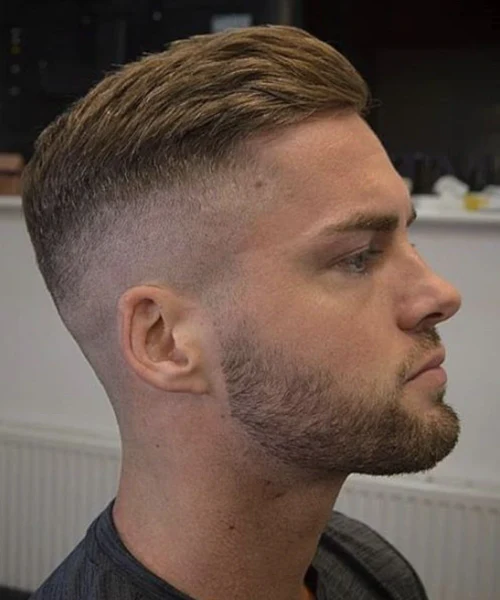
Mid Fade
A mid fade starts around the middle of the sides, offering a noticeable but balanced transition. It is versatile enough to combine with a comb over, textured fringe or fuller top.
Barber instructions: Show the midpoint of the fade in your reference photo and agree on the shortest guard.
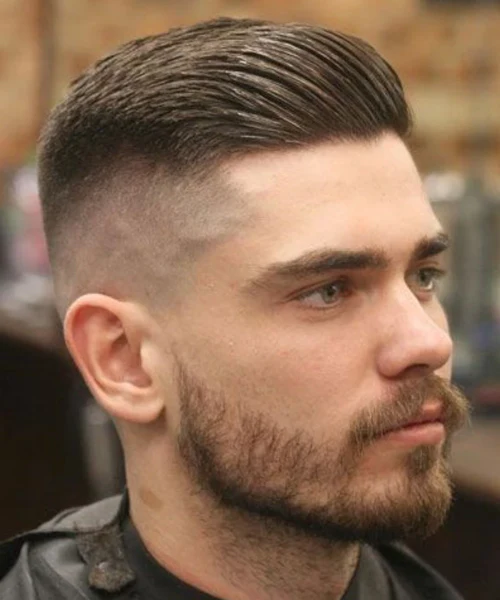
High Fade
A high fade begins closer to the upper sides, creating stronger contrast with the length on top. It’s a distinctive look that benefits from a clear reference photo.
Barber instructions: Ask the barber to mark where the fade will start and leave the chosen top length intact.
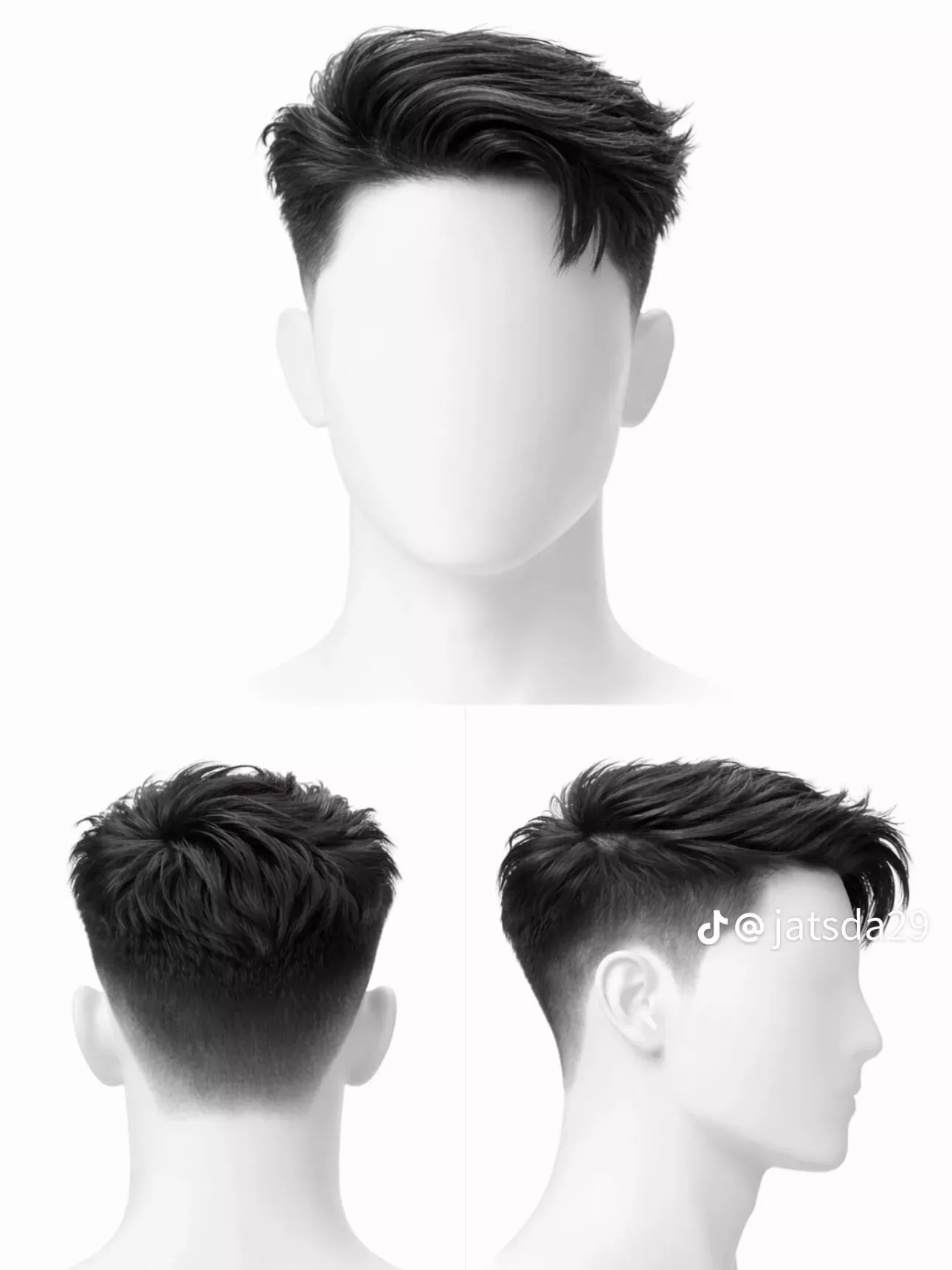
Skin Fade
A skin fade describes a blend that finishes at skin-close length. It can start low, mid or high; the term says more about the shortest point than the position of the fade.
Barber instructions: If you prefer less visible scalp, choose a shadow fade or leave a short clipper guard at the base.

Taper Fade
A taper generally concentrates the shortening near the temples, sideburns and neck instead of fading the entire side very close. It’s a polished choice if you prefer a softer transition.
Barber instructions: Specify how much fullness should stay in the upper sides.

Curly Top Fade
A curly top fade keeps the natural shape on top while shortening the sides. The barber needs to account for shrinkage so the curls don’t end up shorter than you expected.
Barber instructions: Discuss the dry curl length and whether a low, drop or mid fade suits the silhouette you like.
Fade vs. Taper vs. Undercut: The Differences
A fade gradually blends the sides and back from longer to shorter hair. The position can be low, mid or high, and the bottom can remain dark or become skin-close. A taper often focuses more closely around the temples and neckline, keeping greater fullness elsewhere. An undercut creates a stronger separation between long hair above and shorter sides, sometimes without a smooth gradual blend.
Different barbers use some of these names differently. The most reliable way to communicate is to show both side and rear photographs. Compare fade haircut types, low fades, mid fades and skin fades for more detail.
Choose Haircuts by Length
Short haircuts
Short crops, buzz cuts and crew cuts can be practical for men who prefer less styling. A sharp fade may need regular edge maintenance even if the top takes very little time. Browse short hairstyles for men.
Medium-length cuts
Medium hair gives you more versatility—side parts, curtains, layered quiffs and swept-back shapes. Ask your barber to keep enough length to work with the direction your hair naturally grows. See medium hairstyles.
Long haircuts
Long hair still needs an intentional shape. Layers can distribute weight and help waves move naturally, while a trim can keep the ends tidy without sacrificing the length you’re growing. Find long hairstyles for men.
Match the Haircut to Your Hair Texture
Straight hair shows clean outlines and clipper blending clearly, making structured crops and side parts straightforward choices. Wavy hair often benefits from movement and layers instead of heavy product. Curly hair needs a plan for shrinkage and density. Thick hair may require careful bulk reduction while fine-looking hair can benefit from lightweight texture. Explore specific guides for straight hair, wavy hair, curly hair and thick hair.
Does Your Face Shape Affect the Haircut?
It can influence the silhouette you prefer, but face shape doesn’t determine what you’re allowed to wear. A round face can be styled with textured height or soft fringe; an oval face supports many silhouettes; an angular jaw can be emphasized by a close cut or softened by layers. If your cheekbones are prominent, the fullness around your temples can change the balance. Compare our hairstyles by face shape and individual round face and diamond face guides.
What to Tell Your Barber Before Getting a Haircut
Instead of saying only “give me a fade,” agree on these details before the haircut begins:
- Top length: how much hair should remain at the front and crown?
- Fade or taper placement: exactly where should the shortest blending begin?
- Skin exposure: do you want a skin-close finish or a short clipper guard?
- Fringe and part: should the hair sweep to the side, point forward or be brushed up?
- Neckline: do you prefer a natural neck finish or sharply edged lines?
- Routine: will the hairstyle need blow-drying or product every day?
A useful barber script: “I want a low fade with a loose textured top—not a high skin fade. Keep enough length at the front for natural movement, and leave the crown full enough to sit properly. Here are the front and side views I like. Can you show me where the fade will start?”
How Often Should You Refresh a Haircut?
There is no fixed haircut schedule for everyone. Men who like a sharp skin fade may return after a couple of weeks, whereas a softly tapered crop can grow out more naturally. Medium or long layered hair can often go longer between shape changes. Hair growth rate, the detail of the cut and your own preferences matter more than an exact number of days.
Ask the barber to demonstrate the styling technique before you leave. A matte paste can add separation to a crop, while a quiff may require lifting the front with warm air. For curls, moisture and gentle handling can be more important than strong hold.
Frequently Asked Questions
Which haircut is best for men?
A textured crop, crew cut, buzz cut, low taper and mid fade are versatile choices, but no single haircut is best for everybody. Natural texture, hairline, desired length and maintenance determine the best fit.
What is the difference between a fade and a taper?
A fade often blends much of the sides and back into shorter hair, while a taper tends to concentrate the shortening near sideburns and the neckline. Barber terminology varies, so photos help clarify the exact look.
Are skin fades hard to maintain?
Daily styling can be simple, but a skin-close blend shows regrowth clearly. If you want the fresh-out-of-the-chair finish, it may require frequent trims.
What is a low-maintenance haircut for thick hair?
A short textured crop, crew cut or simple taper can work well when the barber handles the bulk carefully. Removing too much weight can sometimes create unwanted shape.
Can men with curly hair get a fade?
Yes. A low, drop or mid fade can complement curls. Ask the barber to plan around dry curl shrinkage and how the top connects into the sides.
How do I explain a haircut if I don’t know its name?
Save front, side and back photos. Point out the length, how much contrast you want, the fringe direction and the neckline finish. Visual details matter more than using an exact name.
More Haircut Inspiration
Explore hairstyle ideas through our hairstyle image gallery, compare the Top 10 Fade Haircuts for Indian Men article, or browse hairstyles for men by hair length and type. The best next step is to pick two or three reference photographs and talk through the shape with your barber.