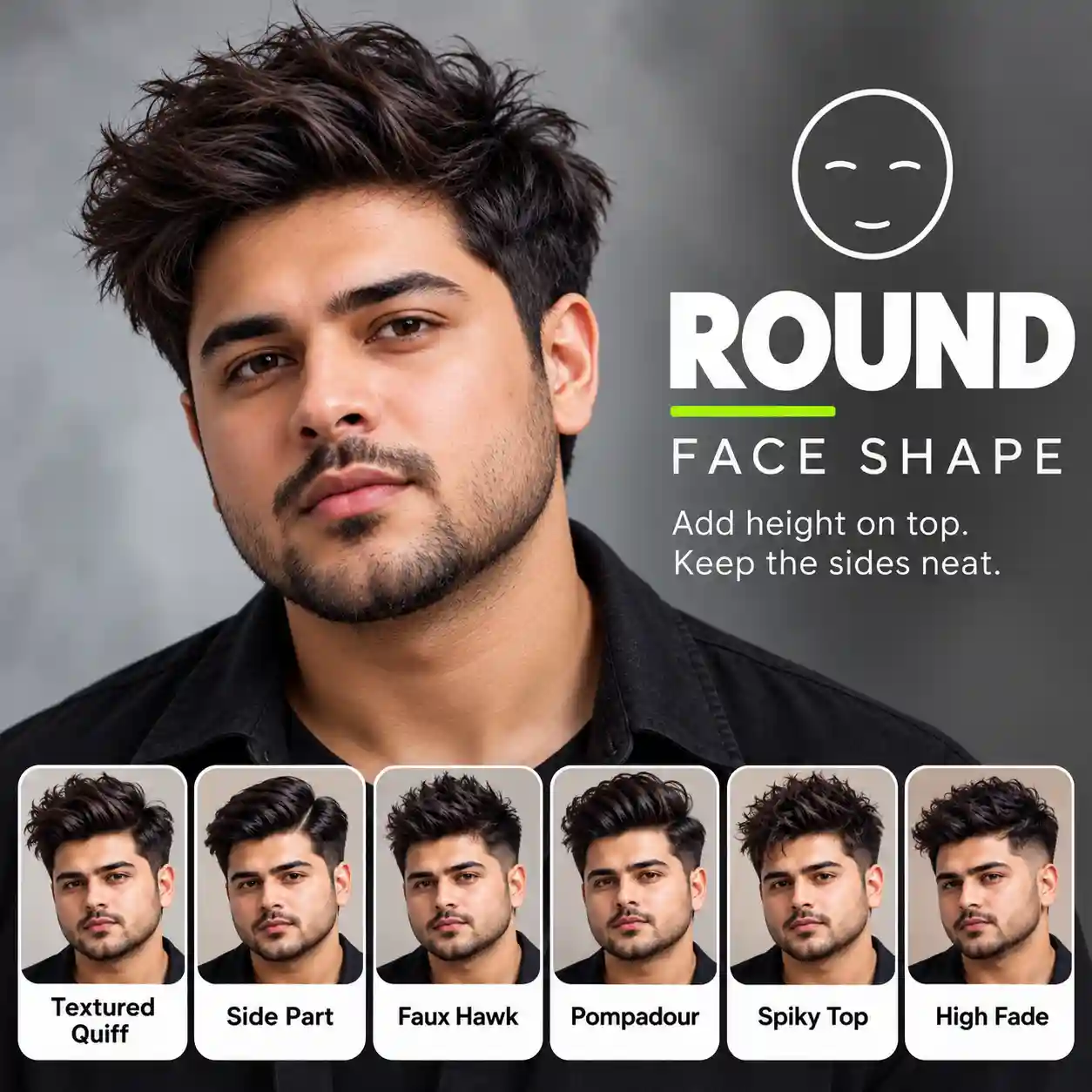
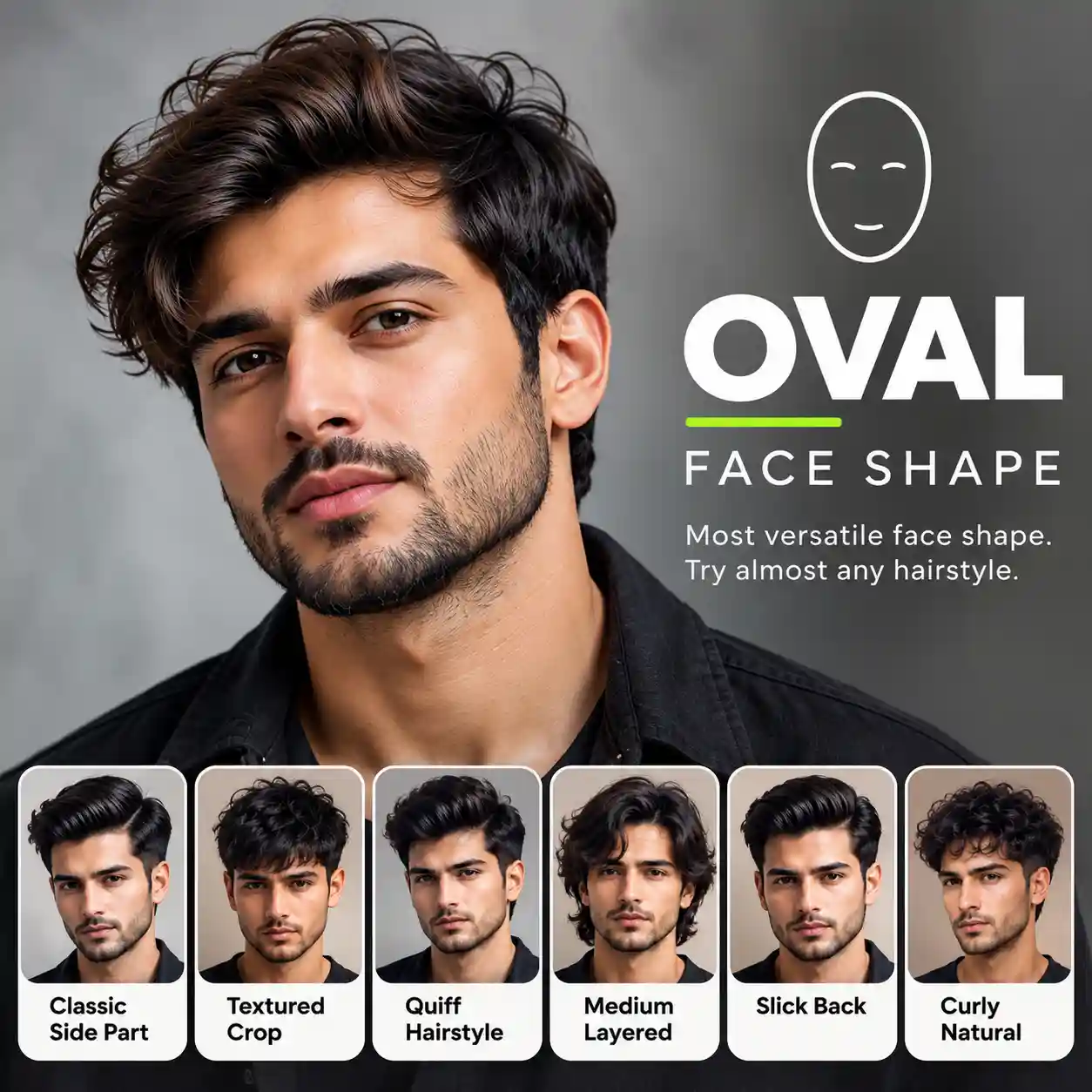
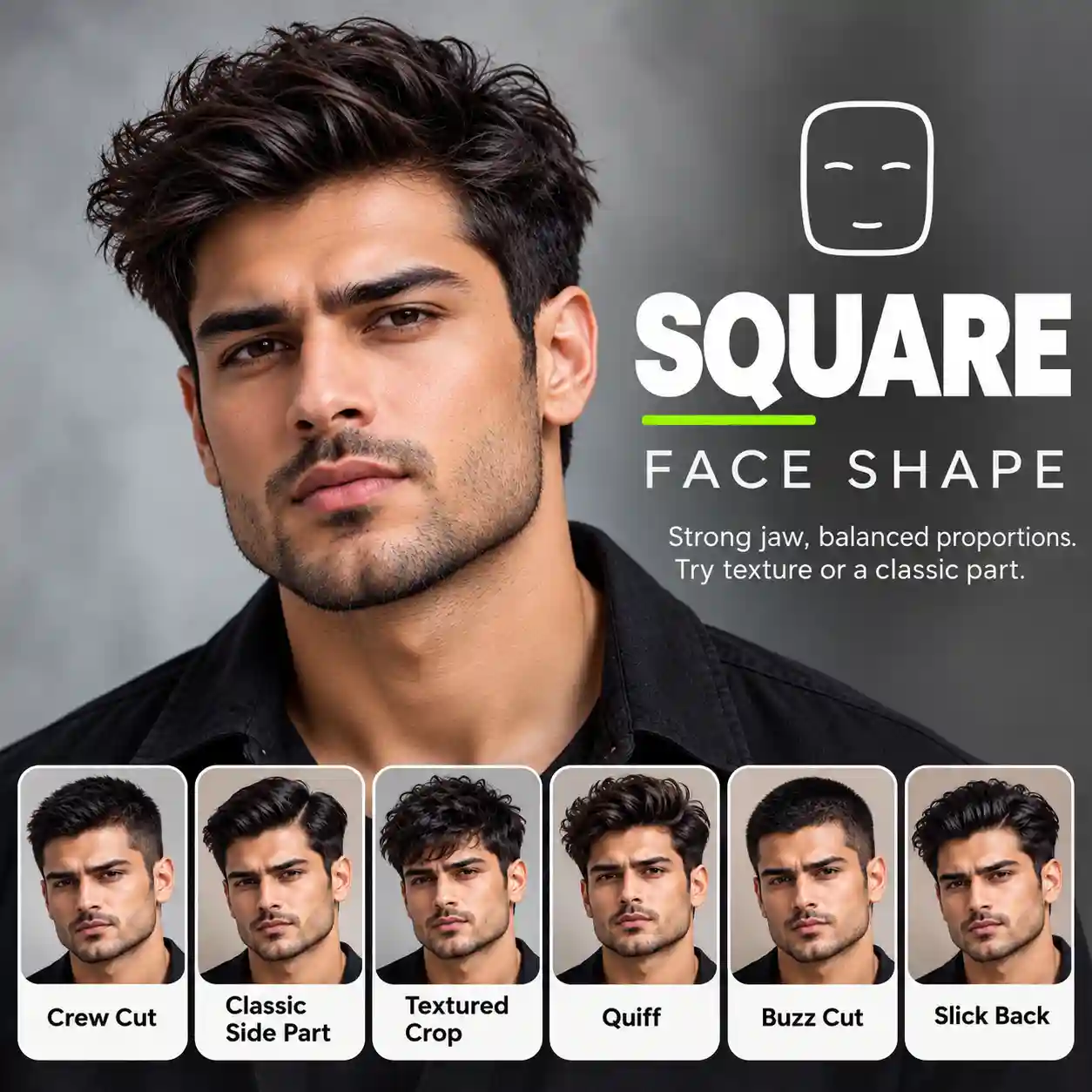
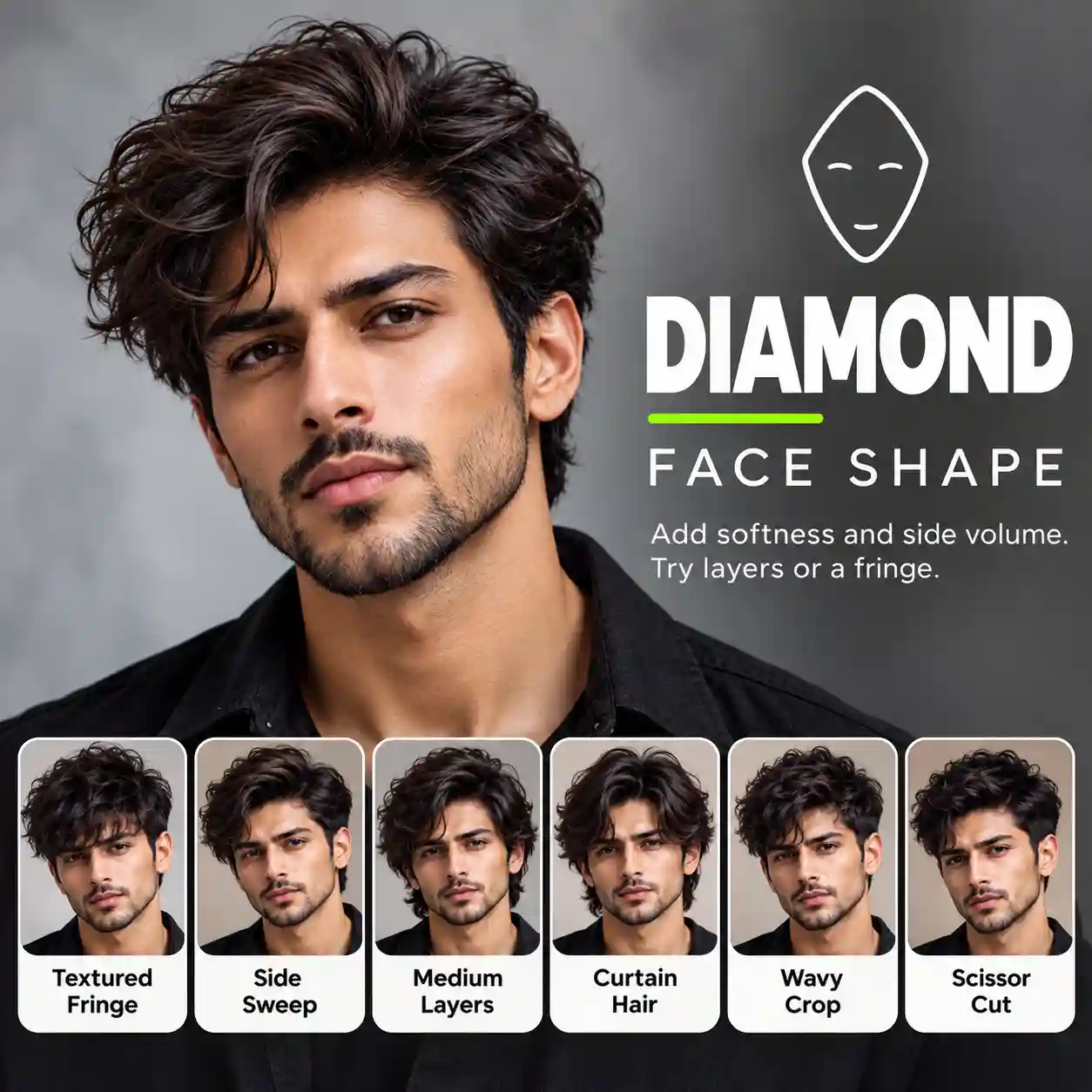
Looking for hairstyles for men by face shape? The right haircut is a balance of hair texture, head shape, facial proportions, personal style and how much effort you want to spend each morning. Face shape helps you understand why certain haircuts create different silhouettes—but it is only one part of the decision.
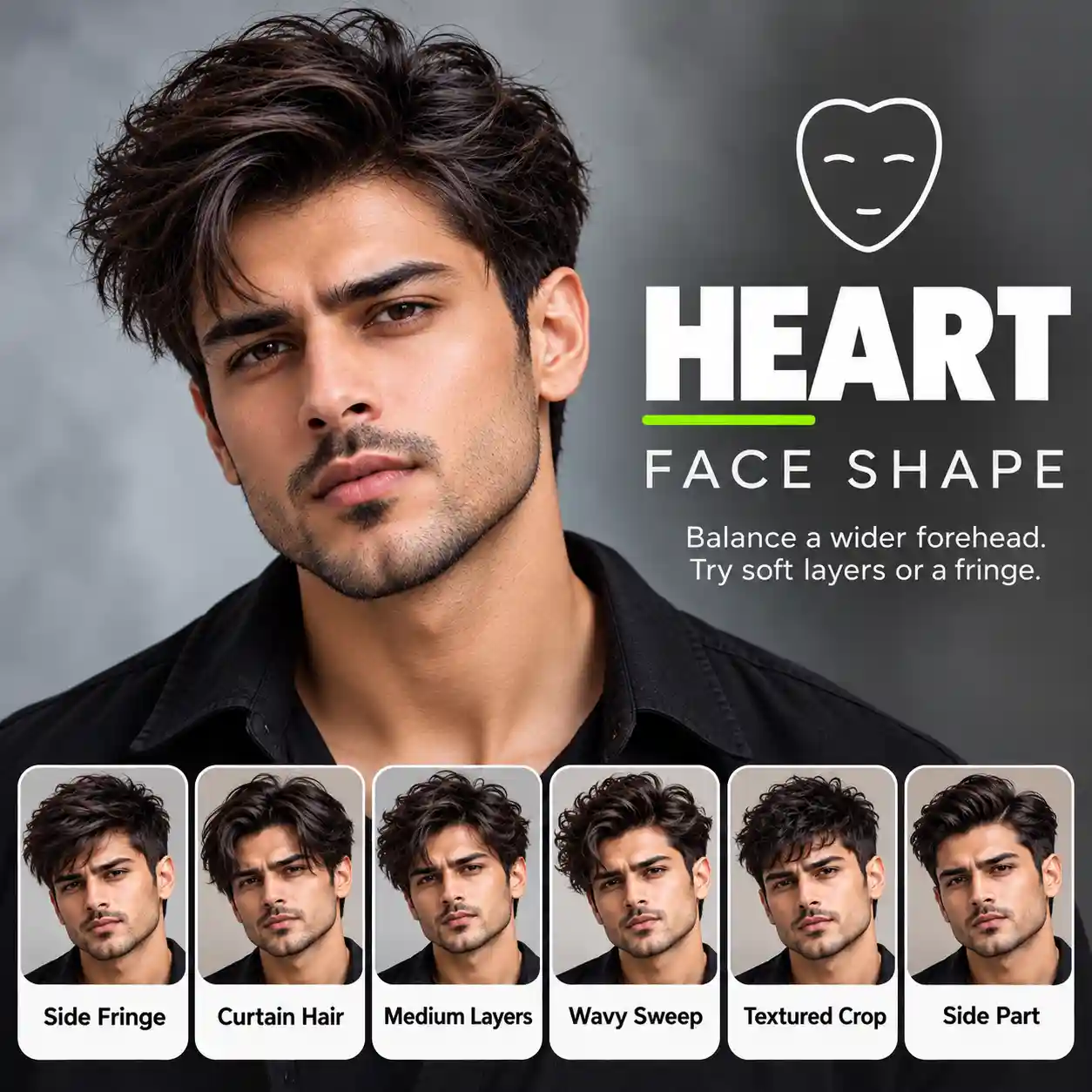
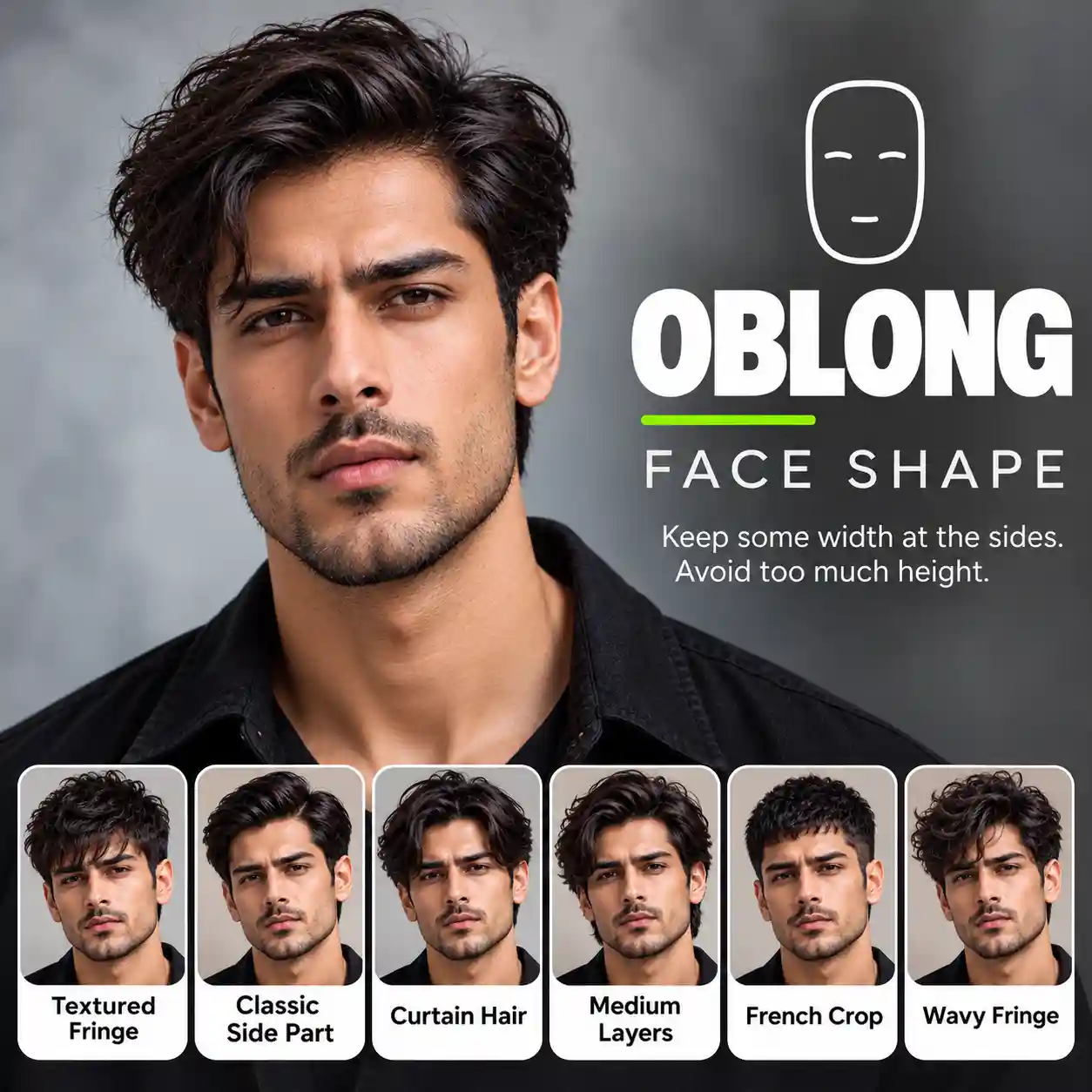
Use the six face-shape guides above to compare hairstyle ideas for oval, round, square, diamond, heart and oblong faces. Each guide can help you find a reference photo, understand which parts of the haircut change its appearance and explain your preferred look to a barber.
Quick Answer: How Should Men Choose Hairstyles by Face Shape?
First, estimate your general face proportions by comparing your forehead, cheekbones, jawline and overall length. Then choose haircut photos with a similar shape and your natural hair texture. A quiff, side part, textured crop, taper fade, fringe or layered medium-length cut can be adapted for many faces. There is no single mandatory haircut for an oval, round or square face.
How to Identify Your Face Shape
You do not need a special app to get a useful estimate. Pull your hair away from your forehead, look straight into a mirror and observe the outline of your face without tilting your head. A front-facing photo taken at eye level may help you compare proportions.
- Forehead width: Compare the width around the temples with the jawline.
- Cheekbone width: Check whether the cheeks appear to be the widest point.
- Jaw shape: Notice whether the jaw appears rounded, sharply angled or narrower toward the chin.
- Face length: Compare the distance from hairline to chin against the width across the cheeks.
- Overall proportions: Choose the closest category rather than expecting a perfect geometric match.
Face-shape categories are rough visual descriptions. Many people have features of more than one category, and factors such as hairstyle, facial hair and camera angle can change how the face appears. Use the category that gives you the most useful examples.
Best Hairstyles for Each Face Shape
Oval Face Hairstyles for Men
An oval face often has balanced proportions and softer contours, which makes it a flexible starting point. Textured crops, side parts, medium layered styles, crew cuts and quiffs are all reasonable choices. Focus on natural texture and maintenance rather than treating the category as permission to wear a particular hairstyle. Explore oval face hairstyles.
Round Face Hairstyles for Men
Round faces are commonly described as having soft curves around the cheeks and jaw. A textured quiff, side-swept style, shorter sides or structured crop can create more visible angles if that’s the look you want. A soft fringe can also work well; there is no need to force extra height into every haircut. See round face hairstyles.
Square Face Hairstyles for Men
A square face often features a more pronounced jaw and a relatively angular outline. Close crops and fades can highlight those lines, while textured fringes and longer layers can soften the effect. Choose which finish feels right for you. Compare square face haircuts.
Diamond Face Hairstyles for Men
A diamond face tends to be widest around the cheekbones, with narrower proportions at the forehead or chin. Styles that retain some fullness around the temples, such as a relaxed quiff, medium layers or a soft fringe, can create a different visual balance. A close fade remains an option if you prefer more contrast. Visit diamond face hairstyles.
Heart Face Hairstyles for Men
A heart-shaped face often has a relatively broad forehead and a narrower lower face. Side-swept texture, a softer fringe and medium-length hair can change where visual width is emphasized. The most useful choice is one that works with your hairline and feels natural to style. Browse heart face hairstyles.
Oblong Face Hairstyles for Men
An oblong face generally appears longer relative to its width. Some people like shorter top volume, a fringe or softer side fullness to vary that proportion. Others prefer a tall quiff or closely faded sides, and that’s a valid personal choice. Explore oblong face hairstyles.
Hair Texture Matters as Much as Face Shape
Hair type changes how a haircut falls and how easily you can style it. Straight hair often shows neat clipper outlines clearly, while wavy hair can create natural movement. Curly hair requires a plan for shrinkage, and thick hair may benefit from careful weight removal.
For instance, a cropped quiff on straight hair may require a blow-dryer and matte paste, while natural waves may create the texture with less effort. A curly fringe can frame a face beautifully if it is cut to the length the curls reach when dry, not only when wet.
How Hair Length Changes Face Shape Balance
Short haircuts make the outline of the face more visible, particularly with close fades or buzz cuts. Medium-length hair gives you flexibility through side parts, layered fringes and changing volume. Long layers can frame the jaw and cheekbones differently depending on whether the hair is loose or tied back. Compare our short hairstyles, medium hairstyles and long hairstyles guides.
How to Talk to Your Barber About Face Shape
Choose two or three reference photos of haircuts you like, and look at them from the front and side. Rather than saying only “I have a round face,” explain what you actually want: a fuller top, less cheek-level bulk, a softer fringe, more side contrast or a natural neckline.
Example: “I like this textured crop because it feels natural and is short on the sides, but I want a softer low taper rather than a skin fade. Can you adjust the fringe and length on top to work with my hair growth?”
Beards and Face Shape: Do They Work Together?
Beard length and outline can also change how facial proportions appear. A short beard, light stubble or fuller chin can visually emphasize different areas of the jaw. That doesn’t mean every face shape needs a beard. Explore our beard styles for men hub for trimming, shaping and haircut-pairing ideas.
Frequently Asked Questions About Face Shape Hairstyles
How do I know my face shape?
Compare the relative widths of the forehead, cheekbones and jaw, then look at the overall face length. Use the closest category as a rough guide rather than expecting perfectly matching proportions.
What hairstyle suits an oval face?
Oval faces can work with many styles, including textured crops, quiffs, side parts and medium layers. The most useful decision is choosing a cut that matches your hair type, length preference and maintenance routine.
What haircut is good for a round face?
A textured quiff, side-swept style or shorter sides can create structure, but soft fringes and other silhouettes can also work. There is no single best haircut for everyone with a round face.
Should men with long faces avoid high fades?
Not necessarily. A high fade can emphasize a tall silhouette when paired with a lot of top volume, while a fringe or moderate top height produces a different effect. Pick based on the appearance you prefer.
Can the same hairstyle suit different face shapes?
Yes. A quiff, textured crop, side part or taper can be adapted through fringe placement, side length, layering and styling. Most haircut names describe techniques, not restrictions by face shape.
Is hairstyle choice based more on hair type or face shape?
Both matter, but natural hair texture, density, growth direction and daily styling effort can make a bigger practical difference than the face-shape label alone.
Find Your Next Hairstyle
Explore hairstyles for men for the full hairstyle directory, browse the hairstyle image gallery for photo references or compare men’s haircuts by fade, taper and crop style. Choose a haircut that suits your actual hair and your routine, then use face shape as one more tool to personalize it.