
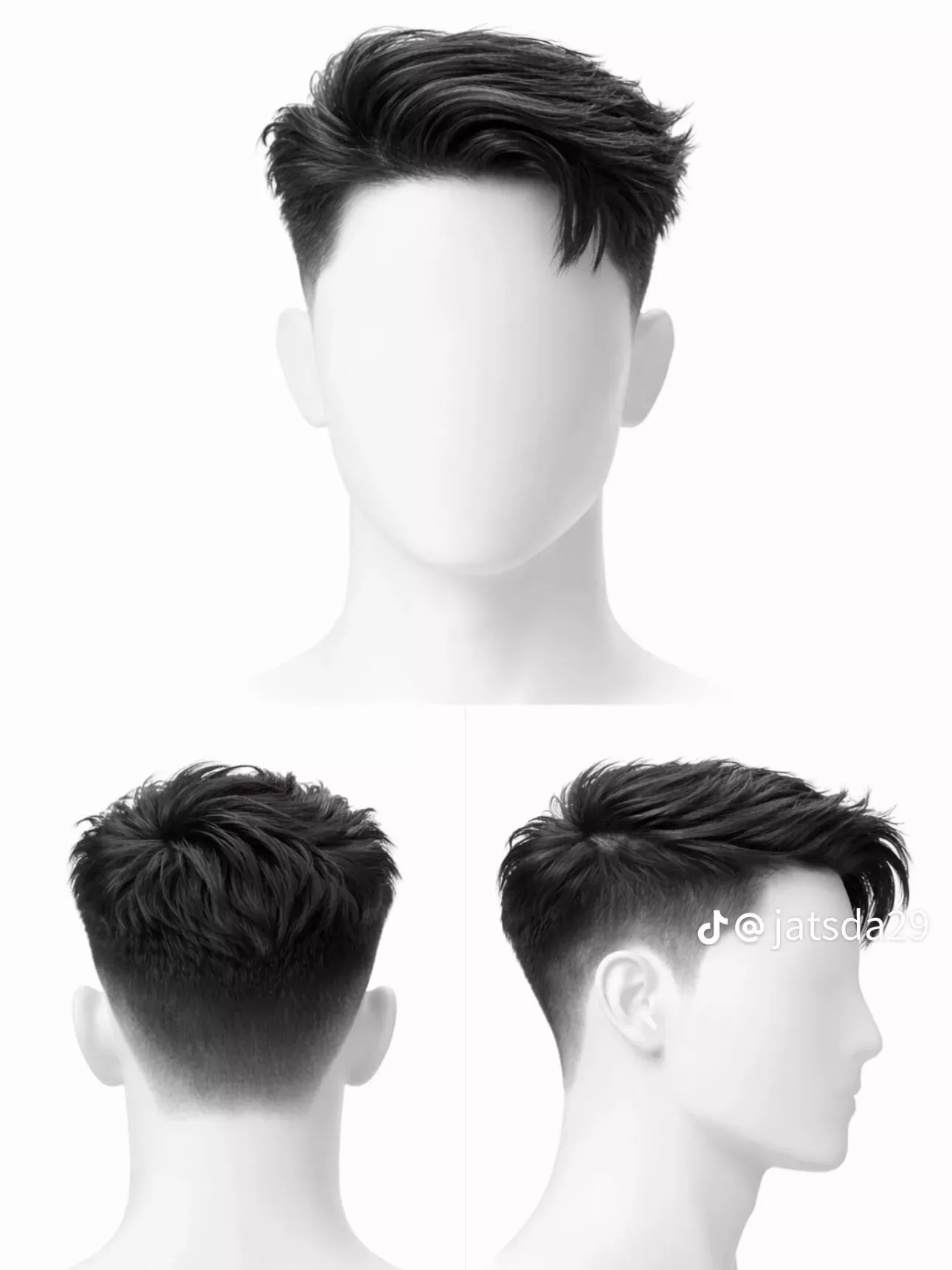
A fade haircut gradually blends shorter hair near the sides and neckline into longer hair above. The placement of that transition—not the haircut on top—distinguishes a low, mid or high fade. A skin fade goes down to the skin, whereas a shadow fade keeps a little visible hair. Use this guide to compare fade types, understand barber terminology and find photographic references that match your hair texture.
The hairstyles below are independently written descriptions paired with existing site images. Exact fade terminology varies between barbers, so a side and back photo is the most reliable reference.
Quick Answer: Fade Haircuts for Men
Choose the fade height separately from its shortest finish. A low fade stays close to the ears, a mid fade rises around the middle sides, and a high fade begins higher. A skin fade removes hair to the skin at the lowest point; a shadow fade leaves visible hair.
12 Fade Haircuts for Men With Photos and Barber Instructions
1. Low Fade for Thick Hair

The transition starts close to the lower sides and ears, keeping more darker hair above.
What to tell your barber: Ask the barber to keep the fade low and preserve the upper side shape.
Styling: Work with your natural hair texture on top and use only the product needed for your preferred finish.
2. Mid Fade for Thick Hair
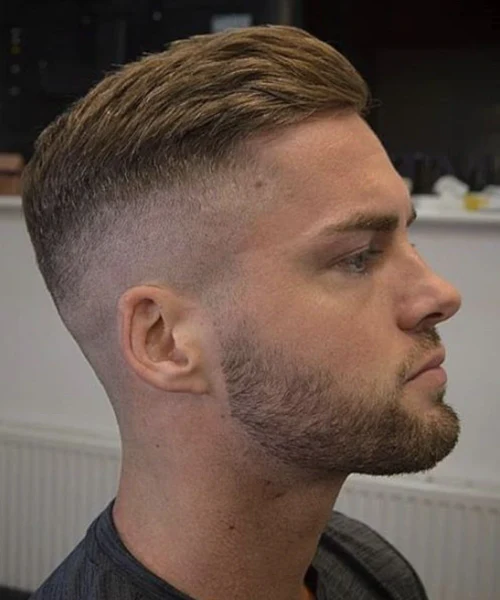
The fade begins at a more central point around the sides, making the contrast more visible.
What to tell your barber: Ask where the mid transition will begin and how it should blend at the back.
Styling: Work with your natural hair texture on top and use only the product needed for your preferred finish.
3. High Fade for Thick Hair
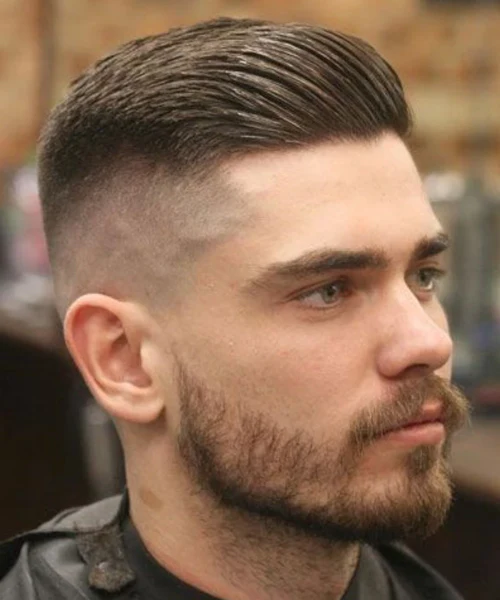
A high fade removes more hair from the upper sides for a sharper contrast.
What to tell your barber: Show the desired height so the barber does not take the blend higher than intended.
Styling: Work with your natural hair texture on top and use only the product needed for your preferred finish.
4. Short Curly Fade

A curly top provides texture while the close sides create a tidy outline.
What to tell your barber: Allow for curl shrinkage and preserve enough top length to form curls.
Styling: Work with your natural hair texture on top and use only the product needed for your preferred finish.
5. Temple Fade With Short Hair
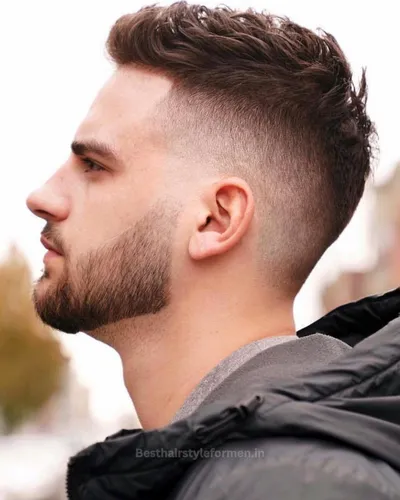
A temple fade concentrates the blend near the temples rather than necessarily fading all sides high.
What to tell your barber: Clarify whether you want only the temples cleaned up or a full side fade.
Styling: Work with your natural hair texture on top and use only the product needed for your preferred finish.
6. Drop Fade for Indian Men

A drop fade curves downward behind the ear, following a rounded path across the back.
What to tell your barber: Bring a side-and-back reference so the curve is visible.
Styling: Work with your natural hair texture on top and use only the product needed for your preferred finish.
7. Shadow Fade With Receding Hairline

A shadow fade keeps a soft, darker transition rather than exposing the scalp fully.
What to tell your barber: Discuss a realistic silhouette around the hairline, not a promise that the cut fixes thinning.
Styling: Work with your natural hair texture on top and use only the product needed for your preferred finish.
8. High-and-Tight Fade

Very short sides contrast with a compact top for a practical haircut.
What to tell your barber: Confirm how short the top should be and how close the sides can go.
Styling: Work with your natural hair texture on top and use only the product needed for your preferred finish.
9. Curly Drop Fade

A drop fade can follow the curve of the head while curls remain longer on top.
What to tell your barber: Preserve dry curl length and shape the transition below the crown.
Styling: Work with your natural hair texture on top and use only the product needed for your preferred finish.
10. Low Fade With Fuller Top
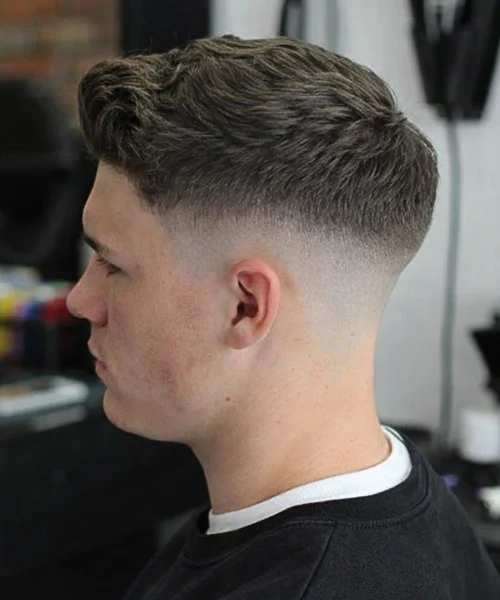
A low fade can suit dense hair while keeping weight above the ears.
What to tell your barber: Keep adequate side darkness and avoid removing too much volume at the temples.
Styling: Work with your natural hair texture on top and use only the product needed for your preferred finish.
11. Mid Drop Fade for Wavy Hair

This variation combines a middle-level transition with a curve toward the back.
What to tell your barber: Show how low the blend should drop behind the ear.
Styling: Work with your natural hair texture on top and use only the product needed for your preferred finish.
12. Low Fade With Wavy Hair
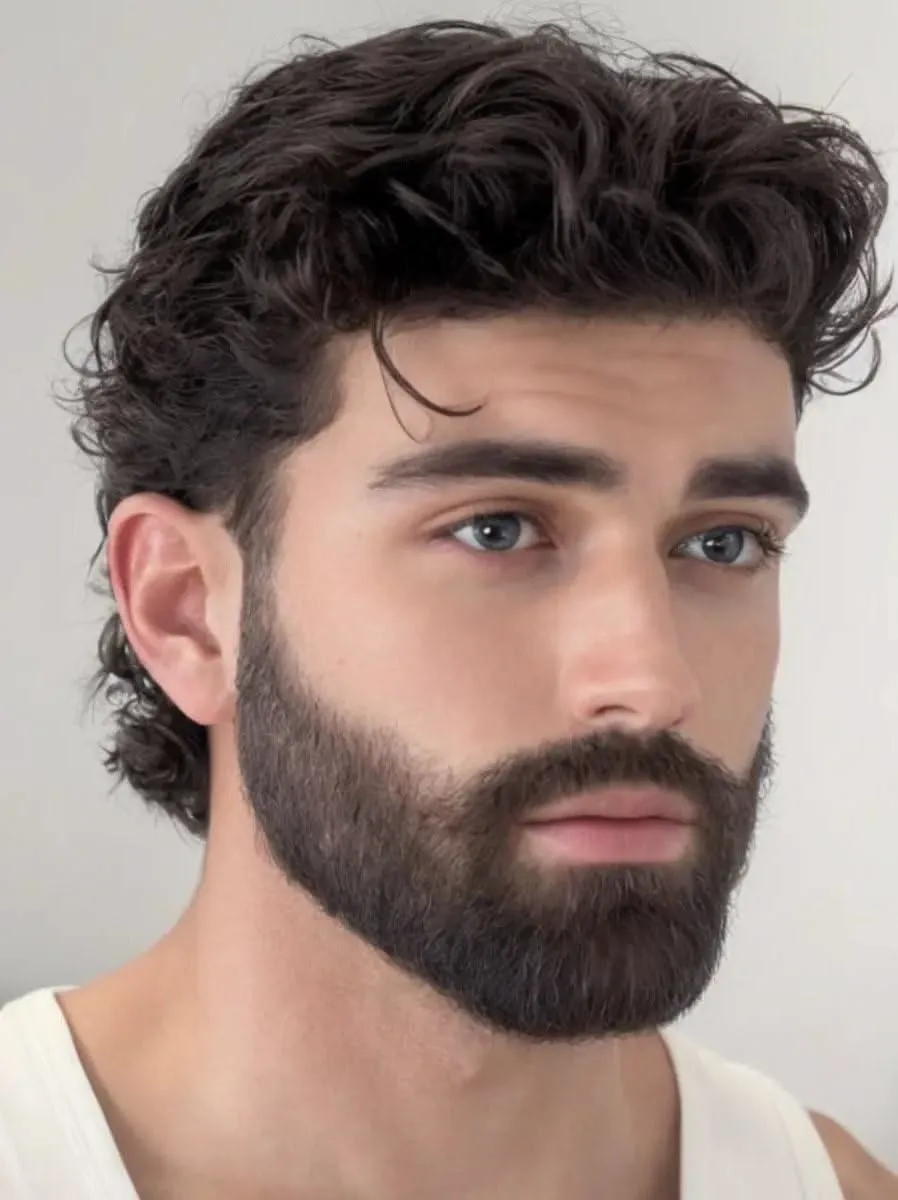
A natural wavy top can sit above a subtle low blend.
What to tell your barber: Allow enough length on top for the wave pattern to develop.
Styling: Work with your natural hair texture on top and use only the product needed for your preferred finish.
More Fade Haircut Photo Inspiration
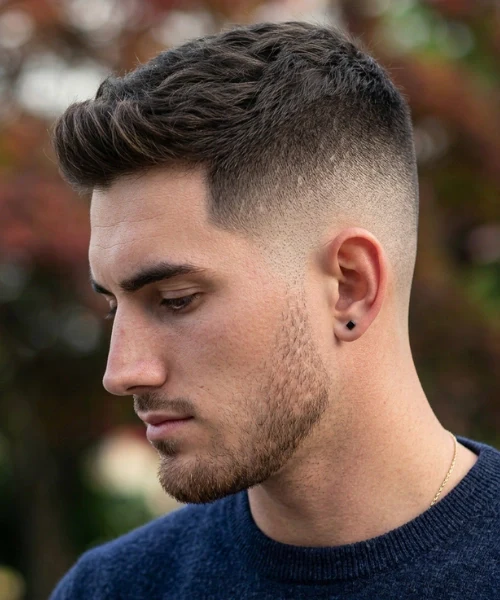
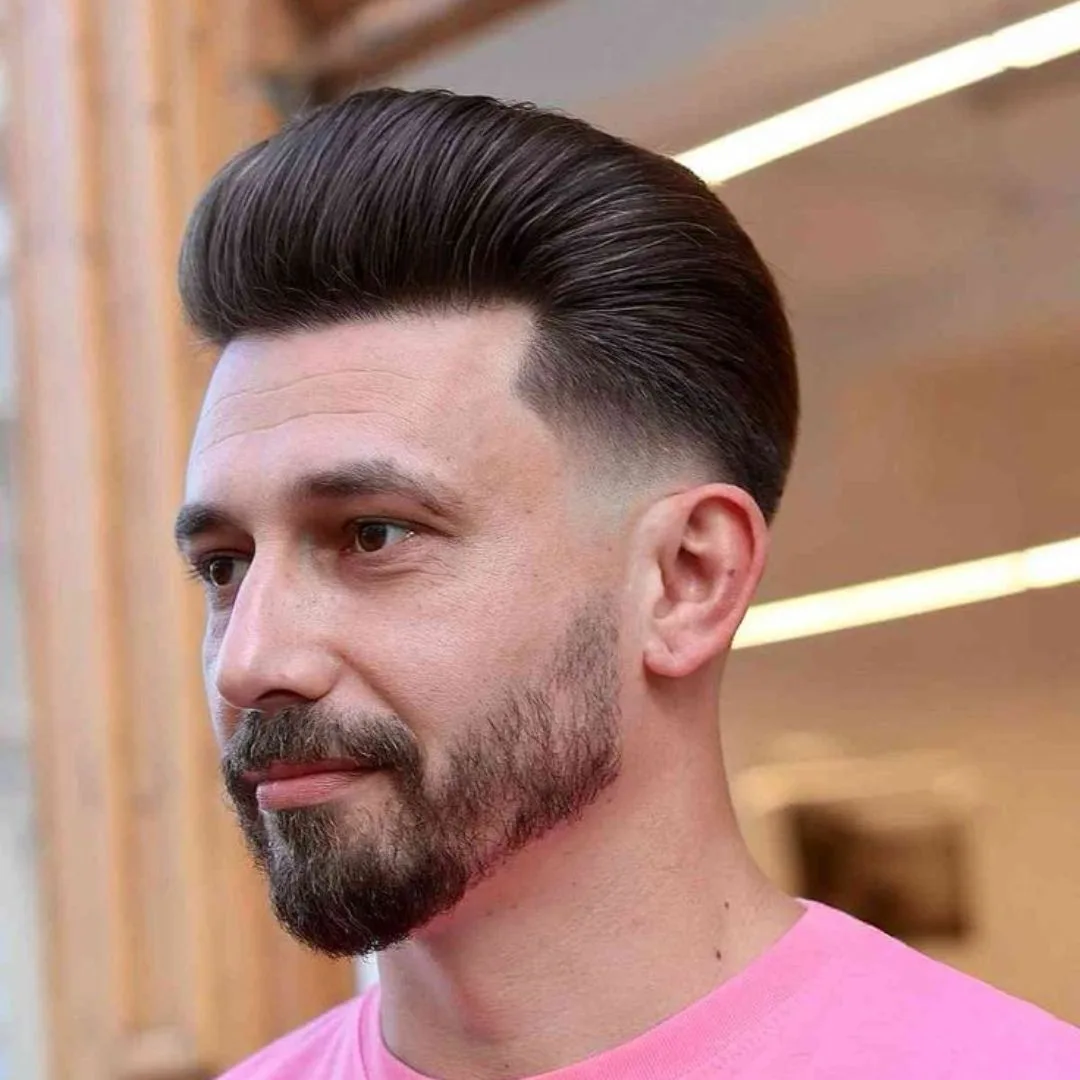
Browse additional reference photos. Each image can be independently changed in the WordPress Gutenberg gallery.




Low vs Mid vs High Fade: What Changes?
A low fade preserves more hair around the upper sides and looks relatively subtle. A mid fade moves the blend higher for more contrast. A high fade removes more upper-side length. A skin fade refers to how close the shortest section is, not its height.
Fade Haircuts for Straight, Wavy, Curly and Thick Hair
Straight hair makes a fade’s sharp outlines more noticeable; wavy hair provides soft movement above the blend; curly hair needs attention to shrinkage; and thick hair may require careful weight reduction above the transition. Explore straight haircuts, wavy hairstyles, curly hairstyles and thick hairstyles.
Fade Hairstyles for Indian Men and Different Face Shapes
Indian men have varied straight, wavy and curly hair patterns, so the right fade comes from texture and personal preference. Round, oval, square and long faces can all wear fades. The fringe height, top volume and side outline make more visual difference than a rigid face-shape rule. Compare our face shape guide.
Fade Haircut With Beard and Professional Styles
A side part with a gentle fade can be an understated professional hairstyle; a curly fringe or textured quiff can look more relaxed. If you have a beard, ask your barber how the fade should connect to sideburns. Explore our beard styles guide.
How to Ask Your Barber for a Fade
Show a front, side and back photo. Specify whether the blend is low, middle or high, and whether the shortest area should be skin, a close clipper guard or a darker shadow. Decide what to keep on top, how the fade connects around the ear and when you want the next maintenance trim.
Frequently Asked Questions
What is the difference between low, mid and high fade?
The key distinction is the approximate height where the fade transition begins: low near the ears, mid around the middle sides and high farther up.
Is a skin fade the same as a high fade?
No. Skin refers to the shortest finishing length; high refers to transition placement. A low skin fade is possible.
How long does a fade last?
The precise outline changes as hair grows. Some people refresh close fades every few weeks, depending on preference and growth.
Can curly hair have a fade?
Yes. Tapers, low fades and higher fades can all work with curly hair when shrinkage is considered.
Which fade works for professional settings?
A soft low fade or subtle taper may look understated, but grooming expectations differ.
Related Men’s Haircut Guides
Browse haircuts for men, short hairstyles, medium hairstyles and the hairstyle image gallery.