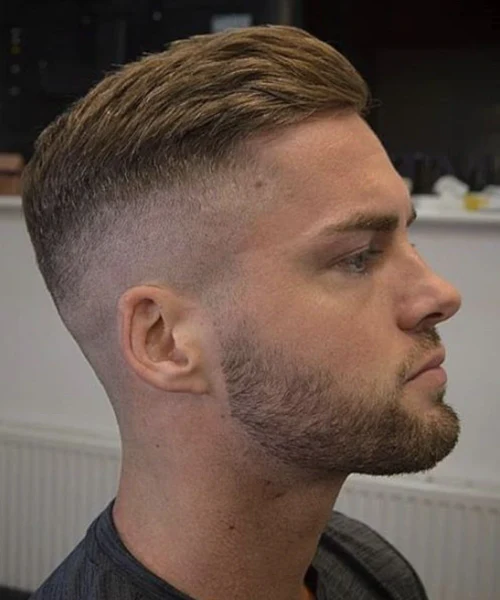
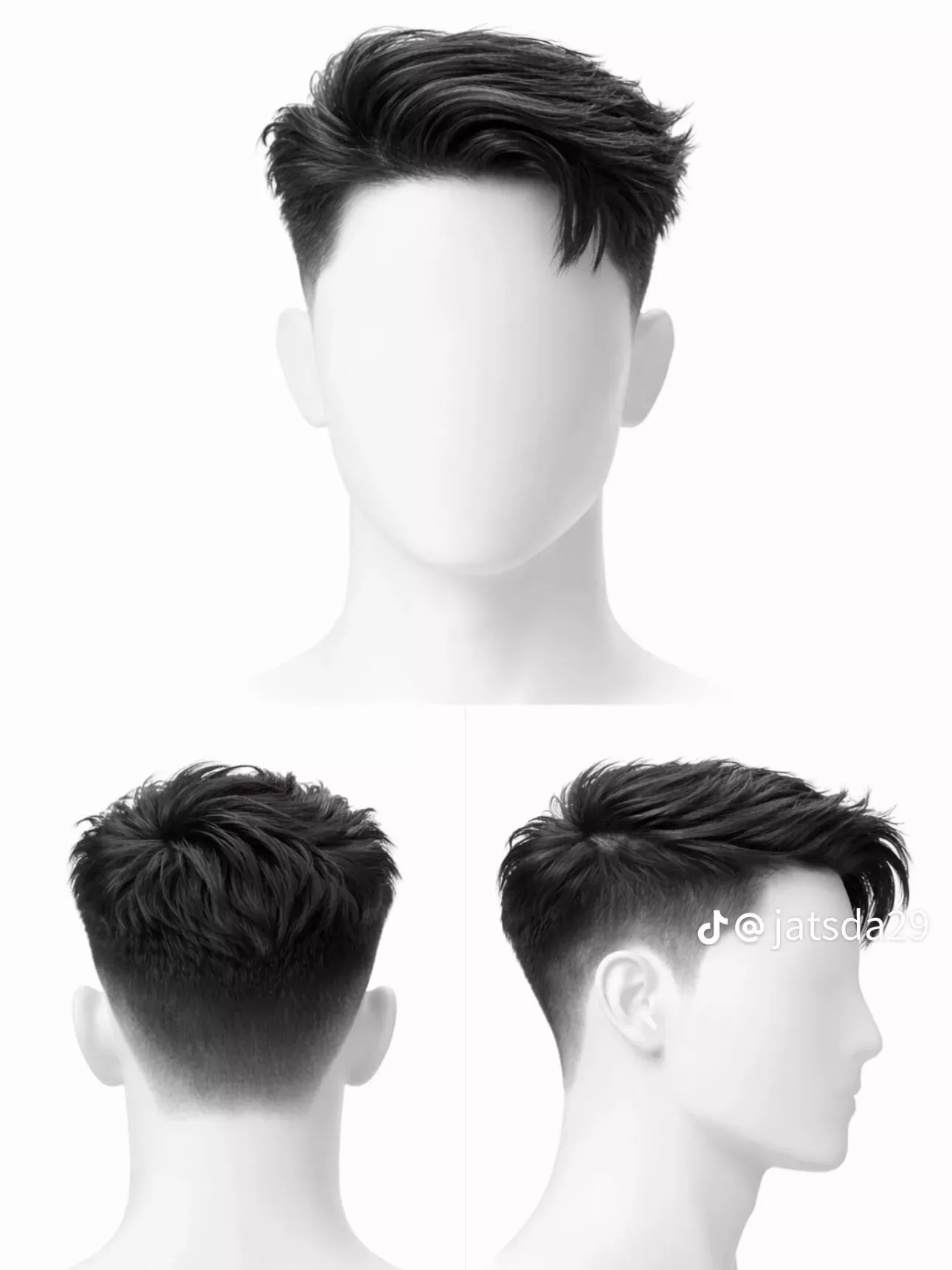
A high fade haircut begins its shortest-to-longer side transition relatively high up the head, leaving a smaller band of upper-side hair than a low or mid fade. It can emphasize a textured fringe, curly top, quiff or very short military-inspired haircut. A high fade describes the height of the blend, while a skin fade describes how close the shortest area is shaved.
The photographs below are from the site’s Media Library. Each picture is a manually editable Gutenberg Image block; use the references to explain the desired shape to your barber.
Quick Answer: High Fade Haircuts for Men
Start by deciding how short you want the sides, where the fade transition should sit and whether the top should be cropped, wavy, curly or swept back. Show your barber the side and back view because haircut terminology varies.
10 High Fade Haircuts for Men: Photos and Practical Tips
1. High Fade for Thick Hair
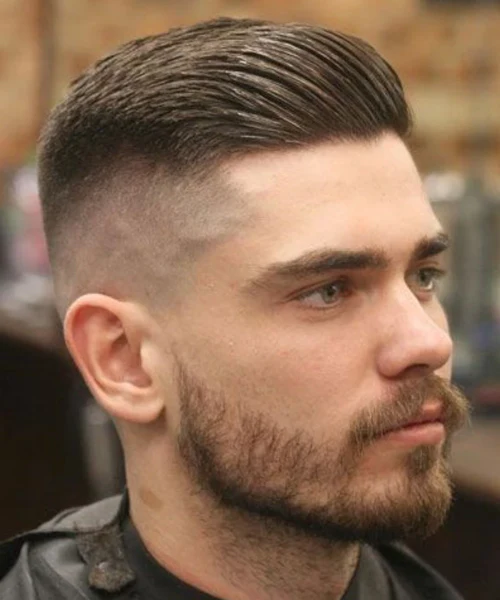
A fuller top contrasts with close-cut upper sides; the top may need careful weight management.
Barber tip: Bring a side and front reference, agree on a length that works when your hair is dry, and explain whether you prefer a quick morning routine or more styling.
2. Wavy High Fade

Natural waves create visible movement while the sides are blended relatively high.
Barber tip: Bring a side and front reference, agree on a length that works when your hair is dry, and explain whether you prefer a quick morning routine or more styling.
3. High Fade Quiff

A quiff uses extra front length above the sharper high-side outline.
Barber tip: Bring a side and front reference, agree on a length that works when your hair is dry, and explain whether you prefer a quick morning routine or more styling.
4. High Bald Fade With Textured Fringe

A close finish on the sides highlights a textured front without requiring a tall top.
Barber tip: Bring a side and front reference, agree on a length that works when your hair is dry, and explain whether you prefer a quick morning routine or more styling.
5. High and Tight Fade

The compact military-inspired silhouette combines very short sides with a tidy top.
Barber tip: Bring a side and front reference, agree on a length that works when your hair is dry, and explain whether you prefer a quick morning routine or more styling.
6. Natural Curls and High Taper

Curls can remain on top while the sides transition higher; taper terminology varies by barber.
Barber tip: Bring a side and front reference, agree on a length that works when your hair is dry, and explain whether you prefer a quick morning routine or more styling.
7. High Fade With Quiff

A swept-up front adds volume against sharply blended sides.
Barber tip: Bring a side and front reference, agree on a length that works when your hair is dry, and explain whether you prefer a quick morning routine or more styling.
8. High Fade Mohawk

A central strip is emphasized by high contrast at the sides.
Barber tip: Bring a side and front reference, agree on a length that works when your hair is dry, and explain whether you prefer a quick morning routine or more styling.
9. High Taper for Wavy Hair

A taper can create a gentler version of a high-side transition; confirm how much area is blended.
Barber tip: Bring a side and front reference, agree on a length that works when your hair is dry, and explain whether you prefer a quick morning routine or more styling.
10. Classic High Fade Reference

This reference demonstrates a high fade’s visible side contrast.
Barber tip: Bring a side and front reference, agree on a length that works when your hair is dry, and explain whether you prefer a quick morning routine or more styling.
More Hairstyle Photo References
Additional relevant references below can be individually changed in the block editor.


Low, Mid, High and Skin Fade Comparison
A low fade keeps the transition near the ears, a mid fade places it around the midpoint and a high fade starts higher. A skin fade describes a skin-close finish, so it can be low, mid or high. Compare the full fade haircut guide.
Fade Haircuts for Indian Men, Different Face Shapes and Beards
Choose the fade based on natural hair texture, growth pattern and preferred side contrast rather than ethnicity. All face shapes can wear fades, with top height and fringe length changing the silhouette. A barber can blend sideburns into a beard if desired. See face-shape guides and beard styles.
Hair Texture and Hair Length
Straight hair shows haircut lines clearly, waves add movement and curly hair can shrink when dry. Thick density may need careful bulk management. For more options browse straight hair, wavy hairstyles, curly hairstyles, short hairstyles and medium hairstyles.
What to Tell Your Barber
Show two or three views of the haircut. Specify the fringe and top length, side transition, neckline and how much styling time you can commit. Ask how the cut will grow out. An accurate reference photo matters more than only naming the style.
Frequently Asked Questions
What is a high fade haircut?
A side blend that begins comparatively high on the head, exposing more of the upper sides than low or mid fades.
Is a high fade the same as a skin fade?
No. High describes position; skin describes shortest length. They can be combined.
Does a high fade suit curly hair?
It can, if enough curl length remains on top and the side blend is placed deliberately.
How often should I maintain a high fade?
The sharp transition softens as hair grows. Trim frequency depends on your preferred finish and growth.
What is high fade versus high taper?
Barbers use these terms differently; a taper often concentrates the blend around edges rather than fading most of the side. Photos prevent confusion.
Explore More Men’s Hairstyles
Explore haircuts for men, hairstyles for men and the image library for more references.