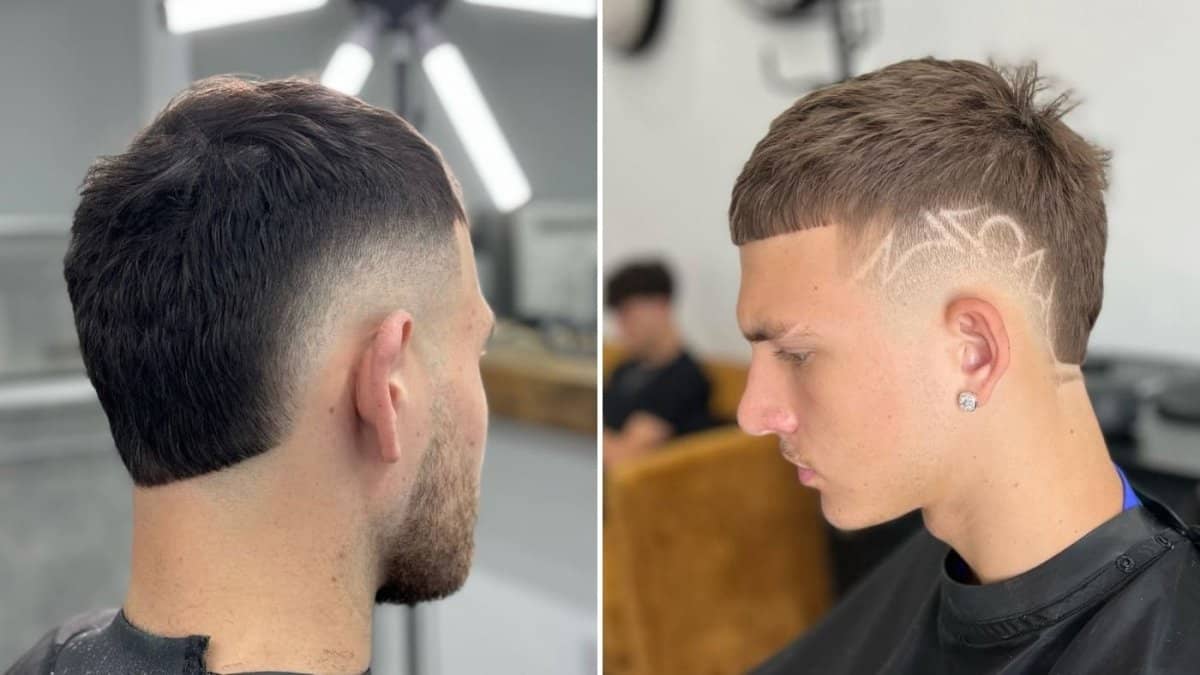
A good fade haircut does more than shorten the sides. It changes the outline of your hairstyle, the amount of contrast between the top and sides, and how polished the result looks as it grows out. This guide compares ten fade haircut styles for Indian men, with practical notes that also apply to men anywhere in the world.
Quick Answer: Which Fade Haircut Should You Choose?
Choose a low fade or taper for a subtle, versatile finish; a mid fade for balance; a high fade or skin fade for stronger contrast; and a drop or burst fade if you prefer a more shaped profile. A shadow fade keeps a little darkness at the shortest section, while a curly top fade is designed around your natural curl pattern.
If you want photo inspiration beyond fades, explore our men’s haircut guide and hairstyles for men directory. You can also compare low fade haircuts, mid fade haircuts and skin fade haircuts in dedicated guides.
10 Best Fade Haircuts for Indian Men
1. Low Fade
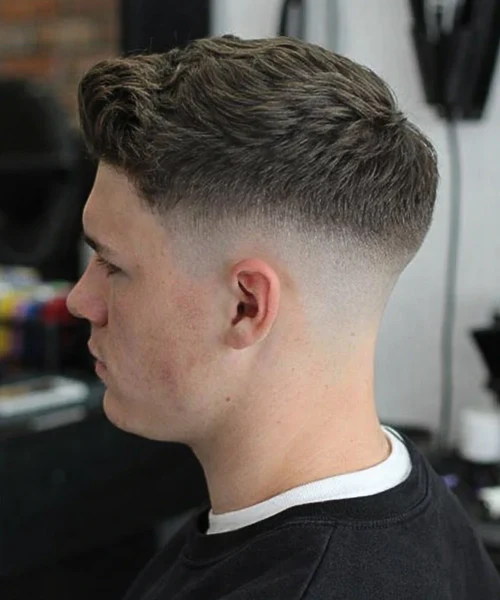
A low fade keeps the shorter transition close to the ears and neckline. The result is understated, making it easy to pair with a textured crop, quiff, comb over or longer top. It is a useful option when you want a clean silhouette without a dramatic change to the sides.
Best for: Men who prefer a subtle professional-looking blend, especially with medium or thick hair.
What to ask your barber: Ask for a low fade that starts just above the ears, with a soft blend into the longer upper sides. Keep the top at a length that suits your natural texture.
Maintenance: Brush or style the top as usual; plan regular trims if you want the fade to stay crisp.
2. Mid Fade
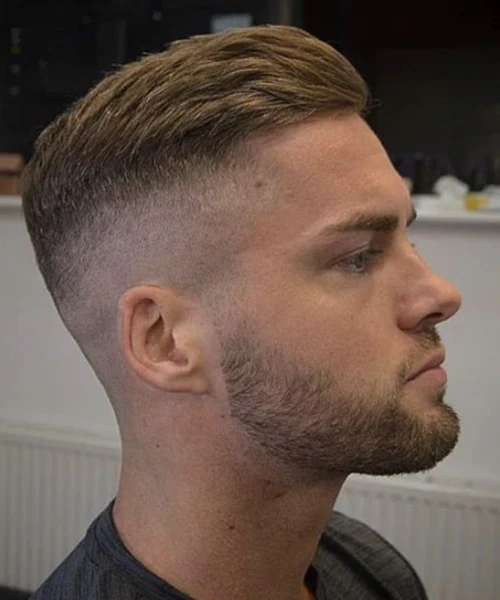
The mid fade sits between a low and high fade. It gives noticeable separation and structure while leaving enough hair higher on the head for styling. It works well with a side part, swept-up fringe or casual textured top and is one of the most adaptable starting points if you are unsure about fade height.
Best for: Most hair textures when you want a balanced fade with visible definition.
What to ask your barber: Show a photo and request a fade beginning around the middle of the sides. Specify whether you want the lowest section clipped very short or left darker.
Maintenance: Use light styling product if needed, and ask your barber how the blend will grow out.
3. High Fade
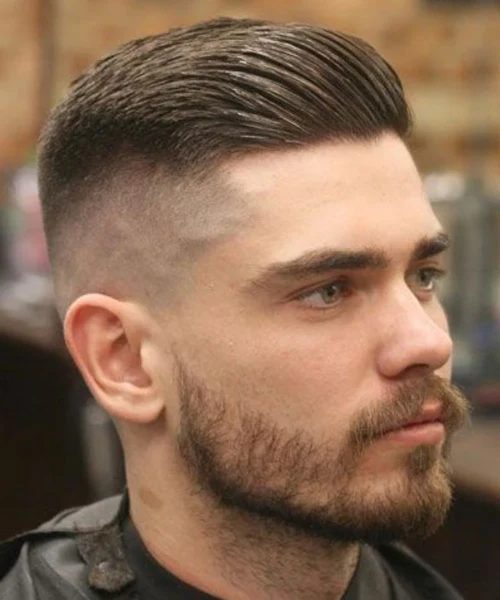
A high fade begins nearer the upper sides of the head, creating strong contrast with the top. It can emphasize a quiff, curls or a dense textured crop. Because more of the sides are closely cut, it can feel lighter in warm weather and has a sharper finish than a low fade.
Best for: Anyone who likes bold contrast and is comfortable with a shorter cut around the sides.
What to ask your barber: Ask for the fade to start high without removing too much weight from the top. Decide whether you want the sides to finish at a clipper length or down to skin.
Maintenance: The high contrast becomes less defined as it grows; maintaining the shape may require frequent barber visits.
4. Skin Fade
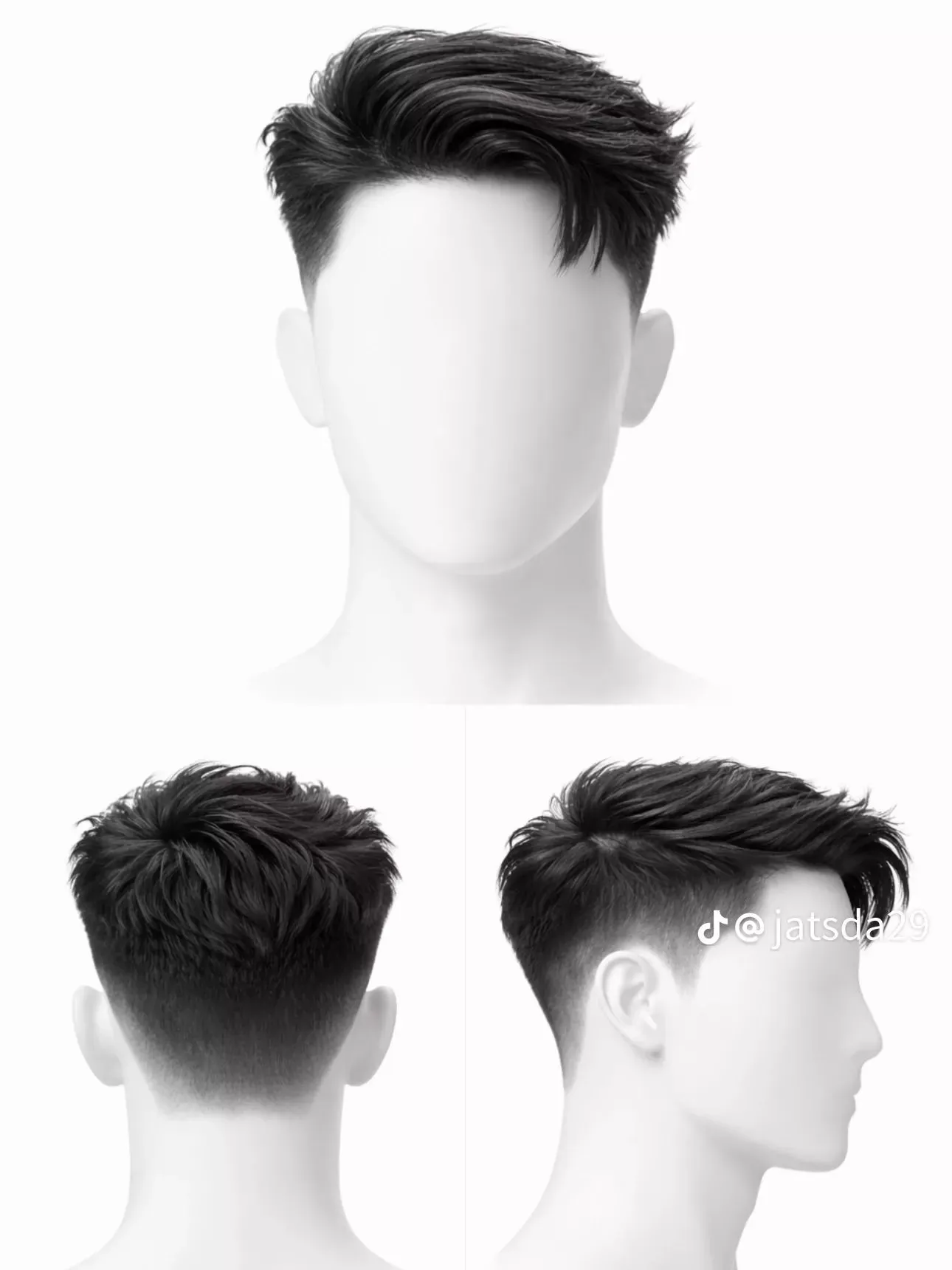
A skin fade gradually blends the hair down to visible skin at the shortest point. It can be a low, mid or high skin fade, so the term describes the finishing length rather than the placement. It looks particularly clean when paired with a short crop or a shaped, medium-length top.
Best for: Men seeking a very close, sharp finish with a defined transition.
What to ask your barber: Clarify both fade height and whether a skin-close finish is comfortable for your scalp. You can ask for a slightly longer zero-guard finish instead.
Maintenance: Protect exposed skin from excess sun and friction, and avoid irritating a freshly clipped scalp with harsh products.
5. Taper Fade
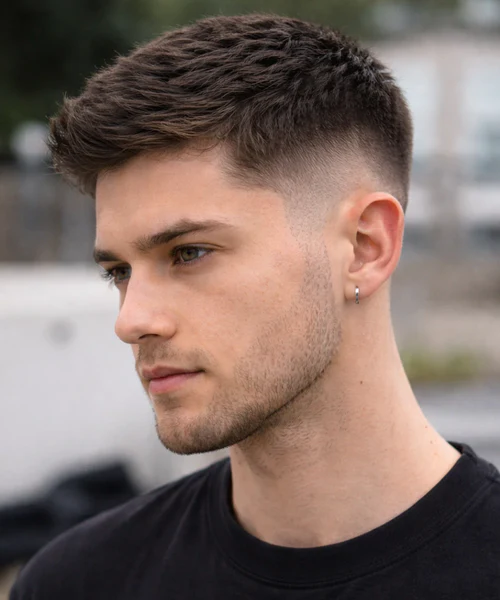
A taper focuses the shortening around the sideburns and neckline while generally retaining more weight on the sides. Barber terminology varies, but a taper fade is often the quieter alternative to a full side fade. It suits professional, student and everyday looks where you still want definition around the edges.
Best for: Men wanting a polished result with less overall side exposure.
What to ask your barber: Ask the barber to taper the temples and nape and preserve the fullness through the upper sides. Take a reference photo so the terminology is unambiguous.
Maintenance: A quick edge cleanup may refresh the taper between fuller haircuts.
6. Drop Fade
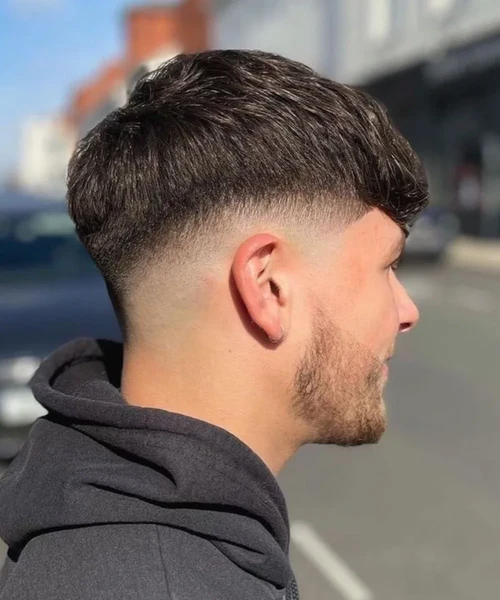
A drop fade curves downward behind the ear instead of following one straight horizontal line. This can keep more weight at the back of the head and frame the shape of the haircut. It pairs especially well with textured crops, waves and some curly styles.
Best for: Men who like a slightly sculpted fade with a distinctive curved outline.
What to ask your barber: Ask for the blend to drop lower behind the ear and keep the curve smooth. Show the back view of your reference hairstyle as well as the side.
Maintenance: The curved line may lose definition as the hair grows, so maintain it with an experienced barber.
7. Burst Fade
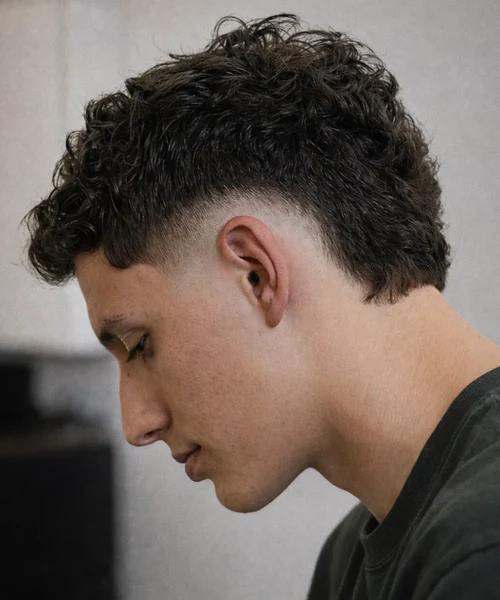
A burst fade radiates around the ear, usually leaving more length toward the back. It can work with a modern mullet, short curls or textured top. Unlike a conventional fade that carries around the whole head, the fade is concentrated around the ears.
Best for: Men looking for a contemporary shape with more texture at the back.
What to ask your barber: Ask for a rounded burst fade around both ears while keeping the shape behind the ears consistent. Decide beforehand whether you want mullet-like length at the back.
Maintenance: Use curl cream or light styling paste where needed and keep the ear-area blending tidy.
8. Temple Fade
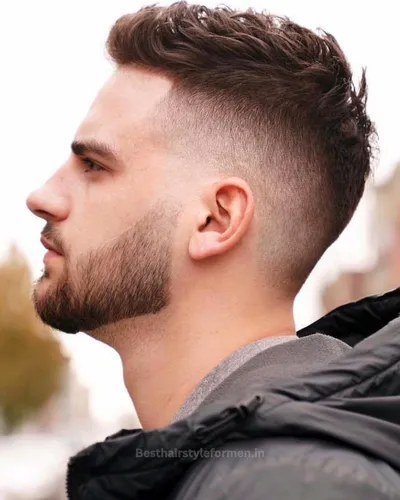
A temple fade, sometimes called a temp fade, focuses on the area around the temples and can be combined with an otherwise fuller haircut. It is a relatively small detail that adds a cleaner outline. The rest of the sides can remain longer, making this style easy to personalize.
Best for: Men who want subtle sharpness without committing to a full high fade.
What to ask your barber: Request a controlled fade at the temples, and discuss whether the neckline should be tapered to match.
Maintenance: An edge touch-up can maintain the detail, but avoid asking for an overly sharp hairline that looks unnatural.
9. Shadow Fade
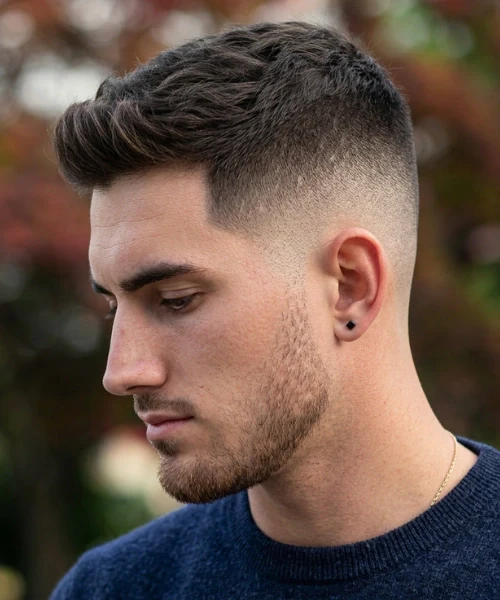
A shadow fade leaves a visible shadow of short hair instead of blending all the way down to skin. The result is smooth and defined while retaining a darker appearance. It works with many hair textures and offers a gentler alternative if you do not want your scalp exposed.
Best for: Men seeking a soft blended look without a bald or skin-close finish.
What to ask your barber: Ask for a shadow fade that ends at a short clipper guard rather than skin. Specify the height using a photograph.
Maintenance: You may find the fade grows out less dramatically than a skin fade, though trims still matter.
10. Curly Top Fade
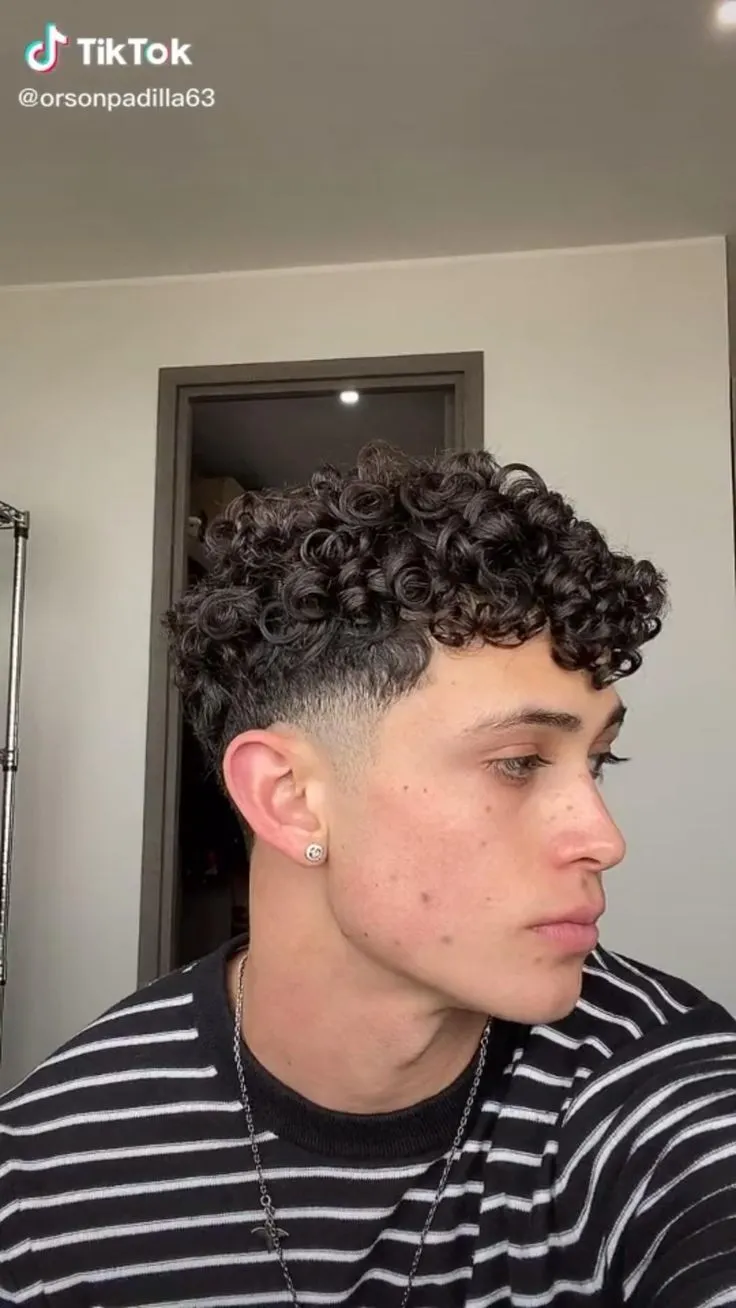
A curly top with faded sides keeps the natural shape and movement of curls while removing bulk through the sides. A low or drop fade can preserve more curl around the crown; a higher fade creates stronger contrast. The best balance depends on curl density and shrinkage.
Best for: Men with naturally curly hair who want definition without flattening the curls.
What to ask your barber: Ask the barber to assess curl shrinkage before setting the top length. Keep the fade below the natural curl shape so the silhouette remains intentional.
Maintenance: Use a gentle conditioner and a curl-friendly leave-in product if needed. Avoid brushing dry curls if it creates unwanted frizz.
How to Pick a Fade for Your Face Shape
Round faces
For a round face, a fade paired with a quiff, side-swept texture or controlled height on top can be one option. You can still wear lower-volume cuts if you prefer them. Check our round face hairstyle guide for examples.
Square and diamond faces
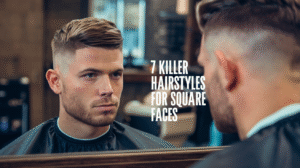
A square jaw often works well with either a neat low fade or a more dramatic high fade, depending on the desired result. For diamond faces, a low fade or taper can help retain some width around the temples; avoid treating face-shape advice as a strict rule. Hairline, curl pattern and styling preference are just as important.
Oval and oblong faces
Oval faces can support many fade heights. If your face appears longer, pay attention to how much height you add on top; an extremely tall quiff might emphasize length. A crop or side-swept style can create a different balance.
Fade Haircuts for Straight, Wavy and Curly Hair
Straight hair often shows clipper blending clearly and works with a crop, comb over or side part. Wavy hair can keep natural movement on top while the fade cleans up the sides. Curly hair benefits from a barber who understands shrinkage: the top should be cut to preserve shape once the curls dry. Thick hair may need careful internal weight removal rather than simply shaving the sides shorter.
The Barber Script: Get the Fade You Actually Want
Show a side-view and back-view reference photo. Then explain four details: fade height (low, mid or high), shortest guard length (skin-close or some visible hair), top length (measured against your existing hair), and neckline finish (natural or sharply edged). Photos are especially important because terms such as taper, drop fade and shadow fade can vary between barbers.
Example: “I’d like a mid fade blended smoothly on both sides, not a skin fade. Keep enough length on top for a messy, textured finish. Please check the crown and my natural growth pattern before cutting.”
How Often Should You Refresh a Fade?
A very sharp skin fade begins looking different as the shortest hairs grow. Men who like a crisp blend may prefer a touch-up after roughly two to three weeks, while someone comfortable with a more relaxed look can often wait longer. Hair grows at different rates, so the right schedule is personal rather than fixed.
To style a fade at home, apply a small amount of suitable product to clean or slightly damp hair, work it through the top and shape using your fingers or a comb. A fade itself rarely needs special daily styling; the top is what determines whether you need wax, cream, gel or a blow-dryer.
Frequently Asked Questions
What is the difference between a low fade and a mid fade?
The main difference is where the blend begins. A low fade starts nearer the ears and neckline, while a mid fade begins higher on the sides. Both can finish at a short guard length or down to skin.
Does a fade suit Indian hair?
Yes. Fade haircuts work on straight, wavy and curly hair. The most useful approach is to choose a blend and top style that suit your natural texture, hairline and routine, rather than assuming one haircut works for everybody.
Is a taper fade the same as a skin fade?
No. A taper usually refers to where the shortening is concentrated, while skin fade refers to how closely the shortest hair is cut. Some barbers combine the two ideas, so use reference photos.
Which fade is easiest to maintain?
A softer low fade, shadow fade or taper can grow out less abruptly than a dramatic skin fade, though the exact result depends on hair density and how precise you want the edges to look.
Final Verdict
The best fade haircut is one you feel comfortable wearing beyond the first day at the barber. Start with a low or mid fade if you want something adaptable, consider a high fade for stronger contrast, or try a curved drop fade or burst fade for a more distinctive outline. Save the photos that match your preferences and ask your barber how the cut will grow with your natural hair.
 47 Best Layered Haircuts for Men in 2026
 THICK FIBER Hair Building Fibers Review: Do They Actually Hide Thinning Hai
 Hairstyles for Boys with Short Hair: Trendy, Cute & Low Maintenance Styles for 2026
 7 Killer Best Hairstyles for Square Face Men 2026